

To work as a dentist in Germany, you need Approbation, the full dental licence, or a temporary permit that covers your work. If your qualification is from outside the EU, EEA and Switzerland and you're making a new application, the Kenntnisprüfung, a knowledge exam, has been the normal route since 1 November 2026. You also need to show your German, health and professional fitness meet the rules. Which office you apply to depends on where you live or plan to work.
How do foreign dentists get Approbation in Germany?
If you live in Germany, the state where you usually live decides your case. If you live abroad, apply in the state where you plan to work. Tell the office where you trained, whether another European country has already recognised your diploma, and whether you've already applied in Germany. That's what tells them which rules cover you.
Trained outside the EU, EEA or Switzerland? You have four weeks after applying to ask for a document-based comparison of your training instead of going straight to the exam. The office has to explain what that choice means before you pick it, and once you choose it, that choice is binding for the procedure. If substantial differences remain after the comparison, you still need the Kenntnisprüfung.
Already had your third-country diploma recognised by an EU, EEA or equivalent state? That can qualify you for a separate European recognition route. EU/EEA and Swiss qualifications follow their own recognition rules too, so the default knowledge-exam route doesn't cover every foreign dentist.
What changed on 1 November 2026?
If you're making a new application with a third-country qualification, you now normally go straight to the knowledge exam, though a training comparison is still available if you ask for it. Filed your recognition application by 31 October 2026? You keep the earlier qualification-assessment rules.
The exam regulation has its own transition too: applied for Approbation or a temporary permit by 31 October 2026? The previous regulation still applies to you. That matters because the amended rules remove the extra exam subject that used to get added when the office found training gaps. Our Kenntnisprüfung guide for dentists walks through the format, subjects, fees and deadlines.
What German level do dentists need in Germany?
You need good enough German to practise safely. Professional German is commonly assessed at C1 level. Your state decides what evidence it accepts and whether you also need to sit the Fachsprachprüfung, the specialist language exam. It isn't always B2 first and then an FSP: Bavaria, for example, waives a separate B2 test certificate under its exam rules.
Check the paperwork before booking a course or test. Our dental Fachsprachprüfung guide compares verified chamber fees, formats and certificate requirements.
Can you work with a temporary dental licence?
A Berufserlaubnis is a temporary permit that can let you work before you get full Approbation. To qualify the ordinary way, you need completed dental training. The office can revoke the permit, and it can limit what tasks you do and where you work. The usual cap is two years of dental activity in total across Germany, not two years for each new employer or state.
The law does allow some narrow exceptions: extensions, certain permits with no end date, and work you need to complete your foreign training. If you hold an EU/EEA or equivalent-state qualification, you're generally excluded from this ordinary permit route, though a well-documented special interest can still justify an exception. None of this guarantees you a permit or Approbation.
In Berlin, you can apply for the temporary permit together with Approbation, even from abroad. Before you accept any work, check the permit's conditions and the local rules on treating statutory-insurance patients.
Can dentists with a foreign degree work in Germany?
Yes. Whatever your dental degree is called where you trained, for example BDS, DDS, DMD or a national title, you can apply for German dental recognition. The degree title alone doesn't give you an automatic right to practise here. Degrees from the EU, EEA or Switzerland follow their own recognition rules. Trained anywhere else? You normally follow the third-country route above, unless another European country has already recognised your diploma.
Anabin lists information on institutions and degrees, and ZAB does academic evaluations. A good academic evaluation on its own doesn't replace professional recognition for dentistry. Ask your licensing office which evidence you actually need before you pay for one.
What radiation-protection proof do foreign dentists need?
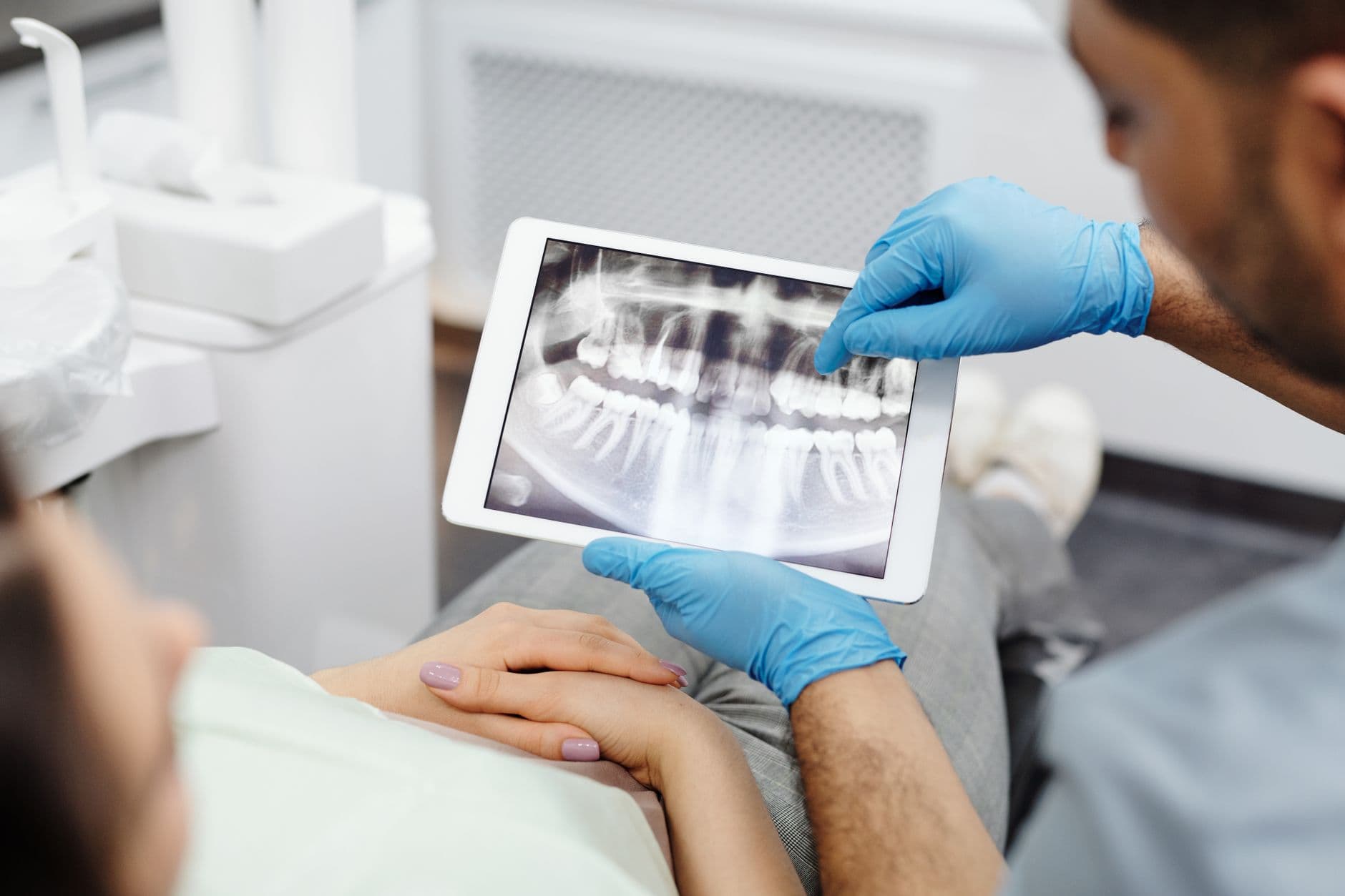
To decide independently that a dental X-ray is justified, you need recognised Fachkunde im Strahlenschutz, certified radiation-protection expertise. Foreign radiation qualifications can be recognised fully or partly, so you may not need to repeat all your training in Germany.
If you're a licensed dentist with the required basic radiation knowledge, you can still do X-ray work under the constant supervision and responsibility of a colleague who holds the Fachkunde. Approbation or a temporary permit alone doesn't cover these radiation rules.
Rhineland-Palatinate has its own extra rule here: since 1 May 2026, its authority asks dentists trained outside the EU for certified radiation-safety course evidence before granting the licence. Check what your own state asks for before choosing a course.
Check whether your foreign radiation training can be recognised before paying for further courses.
Which documents do you need for dental Approbation?
Get your state's current checklist before you pay for translations or certified copies. Under the amended exam regulation, you can generally submit documents as copies, including electronically, in German or English. The office can still ask for originals or certified copies if it has justified doubts; older applications may still follow the previous rules.
The statutory decision deadline normally starts once all your required documents and certificates have arrived: three months, with an extra month for specified equivalence-assessment cases. It can pause for certain confirmations from foreign authorities. That deadline only covers the decision itself; it doesn't tell you how long your whole route, including language learning and exams, will take.
Which German state should you apply in?
If you apply from abroad, choose where you genuinely plan to work and check the evidence it asks for. Berlin, for example, asks for proof of that intention. If you already live in Germany, the amended recognition rule points to your state of usual residence; temporary permits follow where you intend to work. We have no reliable state-by-state waiting-time comparison.
Ask the licensing office about your own application, and ask the dental chamber about available exam dates. Keep their answers separate from the statutory deadlines; those don't measure how long the current queue actually is.
Ask about application requirements and exam dates before committing to a state.
How do you find work after recognition?
Check our dentist jobs guide for vacancies, applications and visas, and our dentist salary guide to compare offers. To get onto the statutory-insurance dentist register, many dentists also need a preparation period first; the Vorbereitungsassistent guide explains that requirement and who's exempt.
Trained as a dental assistant instead? Ask your state dental chamber about that separate occupation. A dental-assistant job does not give you permission to practise as a dentist. You can also use the dentists hub to explore your next steps.
Get a personal offer for your next step
Tell us where you are on your way to working in Germany. We will get back to you with a personal offer, by WhatsApp or email.
How do I become a dentist in Germany as a foreigner?
You apply through the state licensing office that handles your case: your state of usual residence in Germany, or your intended work state if you live abroad. You need to meet the qualification, language, health and professional suitability requirements. New applicants with third-country qualifications normally take the Kenntnisprüfung, unless another recognition route applies. A temporary permit may allow limited work before Approbation.
Can I practise in Germany with a foreign dental degree?
Yes, you can apply for recognition with a foreign dental degree, but the degree alone does not authorise dental work. You need German professional authorisation and the required language evidence. An academic degree evaluation cannot replace this process.
Can I request a training comparison instead of the Kenntnisprüfung?
Yes. Under the new third-country route, you have four weeks after applying to choose a document-based equivalence assessment instead. That choice is binding for the procedure. If substantial differences remain, the knowledge exam is still required.
Do all foreign dentists need the Fachsprachprüfung?
Every applicant needs the German skills dental practice requires. Whether you must sit the FSP depends on the language evidence your state accepts. In Baden-Württemberg, for example, German-language education can support an exemption under its rules.