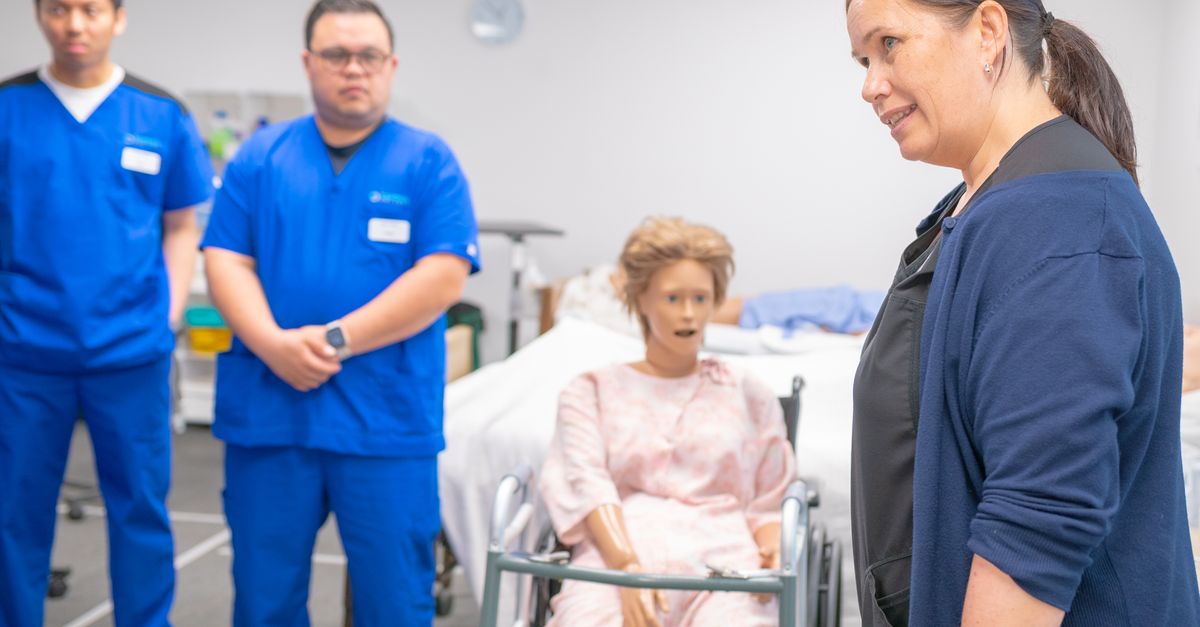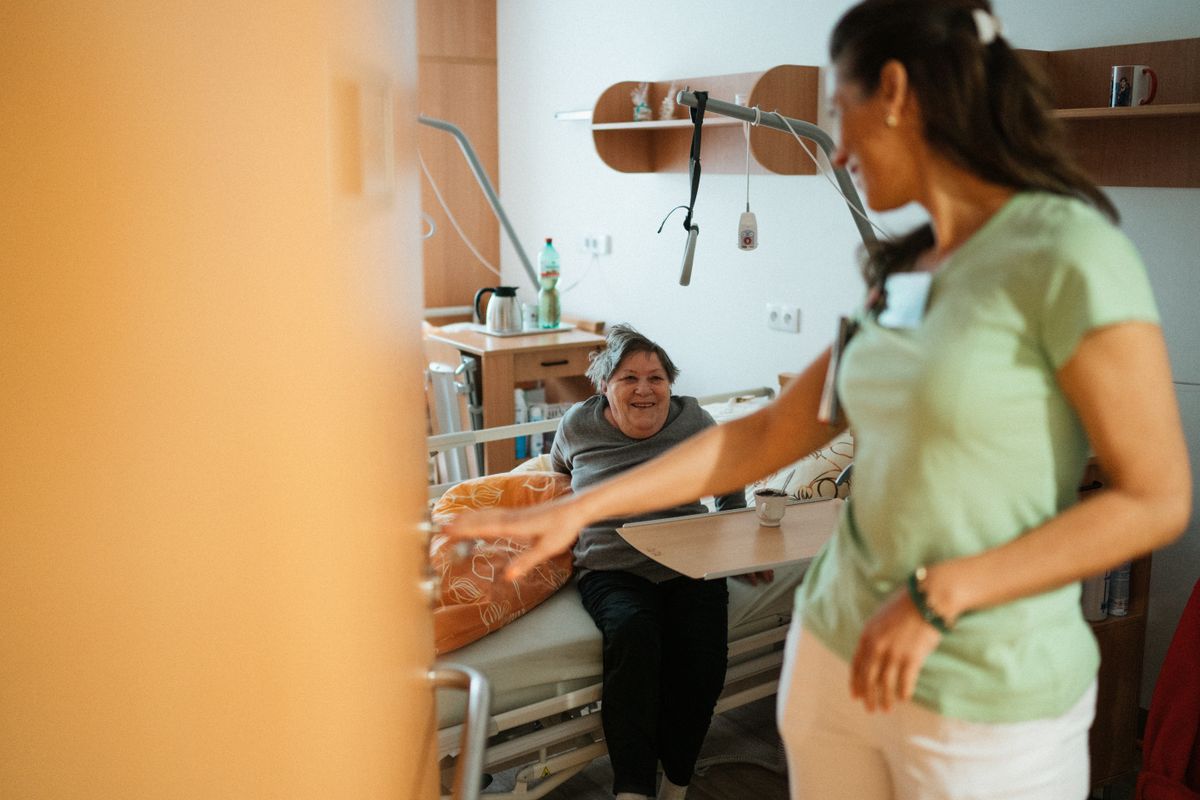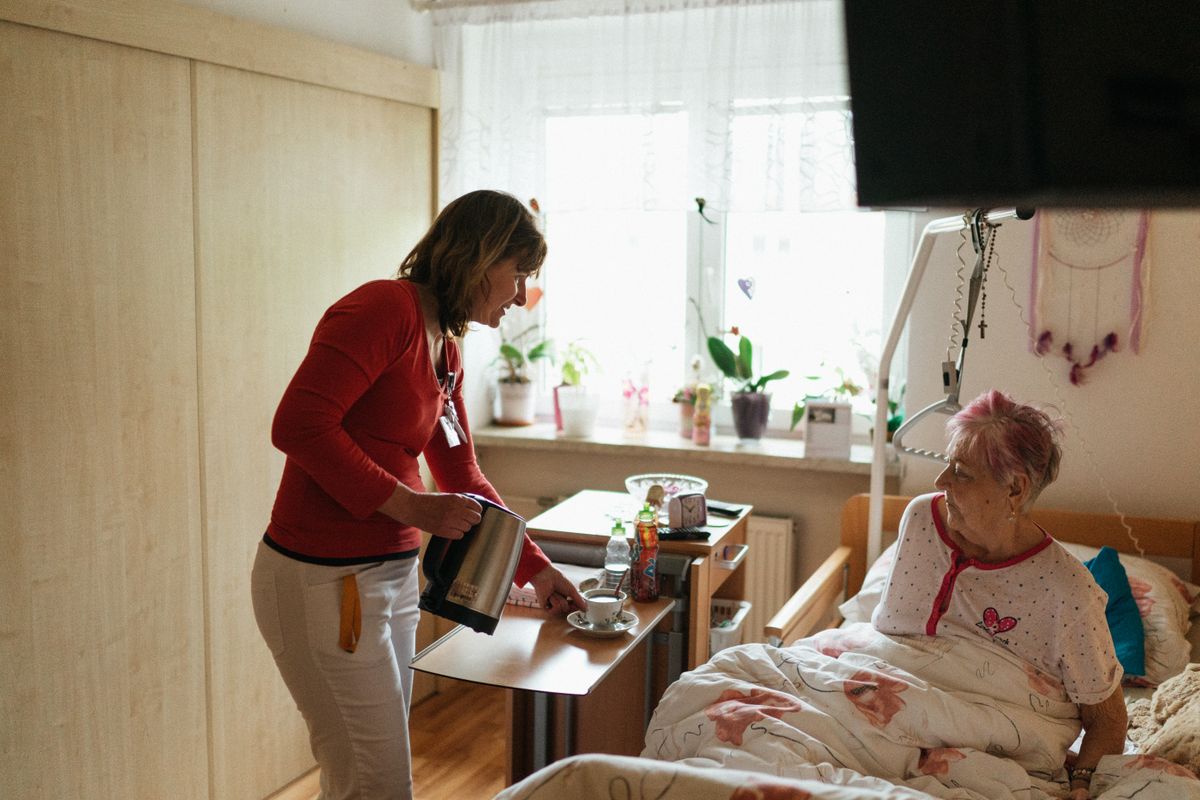
For caregiver jobs in Germany with visa sponsorship, you need a job or training offer and must apply for the visa yourself. Germany has no "sponsorship" visa, despite what many agency ads suggest. For care work below registered nurse level, there are two realistic routes:
- helper or assistant training in Germany,
- a foreign caregiver qualification that a German state office accepts as equal to the German one.
Almost all of these routes need German.
Four kinds of care work in Germany
In Germany, "caregiver" can mean very different jobs, each with its own rules and visa options.
- Live-in home carer: German title: Betreuungskraft, often advertised as "24-Stunden-Betreuung"; Training: No set training; Who sets the rules: Labour law; no visa route made for it
- Care helper or assistant: German title: Pflegehelfer, Pflegeassistent, Altenpflegehelfer and similar; Training: State training of at least one year; Who sets the rules: The 16 federal states
- Nursing care assistant (from 2027): German title: Pflegefachassistenz; Training: Federal training, usually 18 months; Who sets the rules: Federal law
- Registered nurse: German title: Pflegefachfrau or Pflegefachmann; Training: Three years; Who sets the rules: Federal law
Live-in home care ("24-hour care")
Many German families hire a live-in carer for an older person, often from another EU country. EU free movement lets EU citizens work in any EU country without a work permit. There are three ways to work:
- as direct employees of the family,
- as self-employed carers,
- as posted workers, sent to Germany for a limited time by a company in their home country.
The Working Hours Act (Arbeitszeitgesetz) does not allow one person to provide real 24-hour care. In 2021, the Federal Labour Court, Germany's highest court for work disputes, ruled on foreign carers posted to private homes. They must get minimum wage both for active work and for on-call time, when they must be ready to help.
None of the visa routes below is designed for live-in home care. If someone promises you a visa for a 24-hour carer job, ask which rule of the Residence Act (Aufenthaltsgesetz) allows it. Check that rule yourself before relying on the offer.
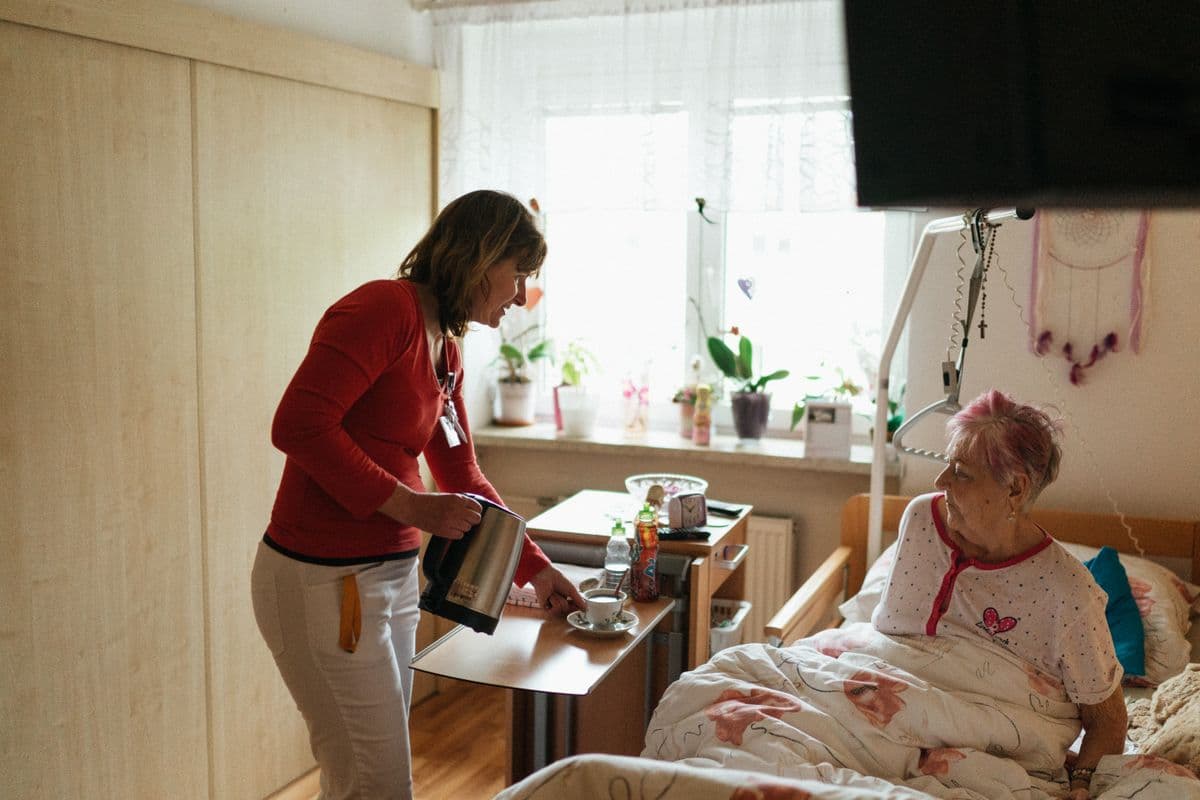
Care helpers do basic care and help with daily needs.
Pflegehelfer and Pflegeassistenz: the state trainings today
Until the end of 2026, each state runs its own care helper and assistant training. The Federal Ministry of Health counts 27 programmes; those meeting national minimum standards last at least one year. Titles include Pflegehelfer for care helpers, Pflegeassistent for care assistants, Altenpflegehelfer for elderly care helpers and Krankenpflegehelfer for hospital care helpers.
According to the official recognition portal, assistants provide basic care for sick and older people and people with disabilities. They also help with household tasks and social needs.
Some states require official approval to use the assistant title. Others do not: the recognition portal lists Pflegeassistent in Lower Saxony, for example, as not regulated. In a state without this rule, people already living in Germany can do the job without recognition, the official approval of a foreign qualification.
For a care helper work visa, you still need an official decision saying your training matches the German one (see route 2).
You can find the pay figures in our post on nursing assistant salaries in Germany.
The new Pflegefachassistenz from 2027
Most of the federal Nursing Care Assistant Act (Pflegefachassistenzgesetz), signed on 28 October 2025, takes effect on 1 January 2027. The training and exam rules followed on 2 June 2026. From 2027, one national training replaces the 27 state programmes.
Here is what the Federal Ministry of Health says you can expect:
- Training usually takes 18 months full-time. Part-time and shorter options are possible, for example with relevant work experience.
- You train in long-term care in care homes, home care and hospital care.
- You usually need a Hauptschulabschluss, the German lower school certificate. Without one, you can start if the nursing school expects you to succeed.
- Every trainee gets appropriate training pay.
- You can move on to the three-year nursing training, which can then be shortened.
- For recognition of a foreign qualification, you take a knowledge exam on missing topics or an adaptation course with supervised work to close gaps. This replaces a full comparison of your training.
During the transition, old and new rules overlap:
- If you start state training by 31 December 2026, you can finish under the old rules until the end of 2029.
- States may allow starts in their old programmes until the end of 2027 if they provide for this to secure training capacity. Those programmes must finish by 31 December 2030.
If you plan to start in 2026 or 2027, ask the school which programme you will follow. Our nursing assistant Ausbildung guide for 2027 explains this vocational training.
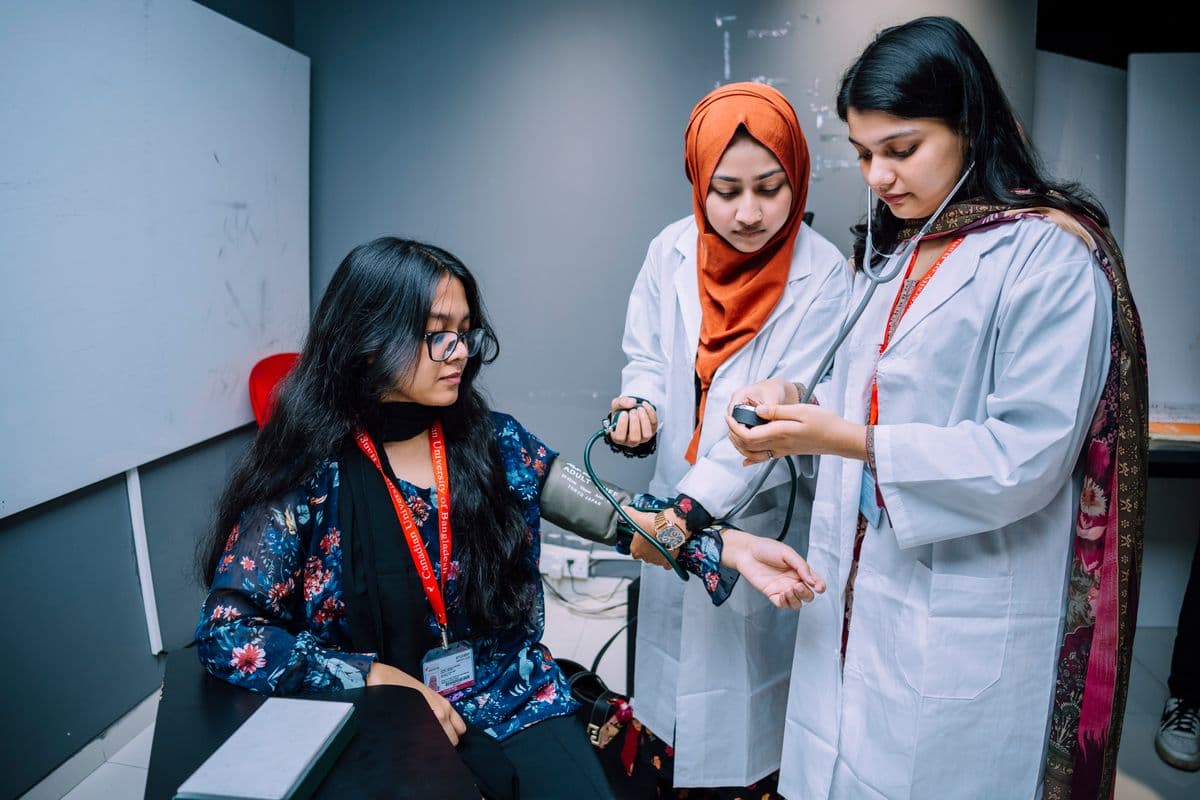
From 2027, one federal Pflegefachassistenz training replaces the 27 state trainings.
Recognition of a foreign caregiver qualification
With a caregiver or nursing-aide certificate from your country, you can apply for Anerkennung, official recognition. Apply in the state where you want to work; the office compares your training with German helper or assistant training. The finder on anerkennung-in-deutschland.de shows your office, documents and fees.
A short caregiver course may or may not match the German training. The office checks its content and length case by case, so we cannot predict the result.
If the office finds training gaps you can close through a course or exam, you can come to Germany for that. There are two visa options:
- The visa for an adaptation course or exam in Germany. This covers the course or exam preparation for up to 24 months initially. You may also work up to 20 hours a week in a side job.
- The recognition partnership visa (Anerkennungspartnerschaft). You work in your field for one employer while completing recognition. You need a care qualification from at least two years of training, a concrete job offer, a written agreement with that employer and approval from the Federal Employment Agency.
Both visas need at least basic German (level A2). The exact rules are in the Residence Act (see Sources).
Caregiver jobs in Germany with visa sponsorship: the routes that exist
You use the employer’s contract to apply for your visa. We checked the following routes in German law.
1. A training visa
You can come to Germany for helper or assistant training leading to a state-recognised qualification, or for the three-year nursing training. You need:
- a place at a school or a training contract,
- proof that you can pay your living costs,
- German at the level the school asks for.
After helper or assistant training in health and care in Germany, you can get a residence permit to stay and look for work. It lasts up to 12 months, with one extension of up to six months.
2. A work visa as a care helper
The Federal Employment Agency (Bundesagentur für Arbeit) can approve work as a Pflegehilfskraft, a care helper. You need a job offer and either:
- a German state-recognised helper training, or
- a decision from the state office that your foreign qualification matches one.
You must also meet the state's requirements for the job. Without the required recognition, you cannot use this route.
3. Skilled-worker visas
Skilled-worker visas are for Fachkräfte, or skilled workers, and qualified vocational training must last at least two years. A one-year helper course falls short, so most caregiver certificates do not qualify you for this visa. A recognised nursing degree does: see our nurses hub.
4. The Western Balkans rule
Citizens of Albania, Bosnia and Herzegovina, Kosovo, Montenegro, North Macedonia and Serbia can get approval for any job, including care helper work, without a recognised qualification. The Federal Employment Agency must check whether a suitable applicant from Germany or the EU is available; this is the Vorrangprüfung. The limit is 50,000 approvals a year.
At the government press conference on 4 November 2026, the cabinet's decision to halve it to 25,000 was confirmed, but the law in force still sets a ceiling of 50,000. Before applying, check the final regulation and when it takes effect. You must make your first application at a German embassy or consulate in one of these six countries.
5. The Chancenkarte
Since 1 June 2024, the Chancenkarte, or opportunity card, lets you come to Germany for up to one year to look for work. You may work up to 20 hours a week on average during your search. If you are already a recognised skilled worker, you need no points based on your profile.
For the points route, you normally need a state-recognised foreign vocational qualification with at least two years of training or a university degree. If a German recognition office says you need adaptation, measures to close training gaps or further qualifications, and that decision qualifies for 4 points, you do not have to meet that qualification requirement. You still need 6 points in total, German A1 or English B2, and enough money to support yourself; a short care course alone does not qualify you. Our guide to the Germany Opportunity Card for healthcare workers explains the points and proof-of-money rules.
Agencies and fees
For some countries, including Ghana, Nigeria, Pakistan, Nepal and Bangladesh, only the Federal Employment Agency may recruit for health and care jobs. Private agencies cannot recruit or place workers for these countries, but you can apply directly to a German employer yourself. German law also limits agency fees:
- For a job, an agency may charge you only after you sign a work contract.
- The fee is at most 2,000 euros including VAT (value-added tax).
- The agency may not ask for an advance payment.
- For a training place, only the employer may be charged.
The rules are in the Employment Regulation and in Social Code III (see Sources).
Can I get a caregiver job in Germany if I only speak English?
You need German for hands-on care, where you talk with patients, colleagues and families daily. The law requires it for a nursing licence; for helper jobs, states and employers set the level.
The visa language requirements also depend on your route:
- Chancenkarte points route: beginner German A1 or upper-intermediate English B2. If you already qualify as a recognised skilled worker, this points-route language threshold does not apply to you. The card lets you look for work; the job will still expect German.
- Adaptation course, exam or recognition partnership visas: at least basic German A2.
- Training visa for the three-year nursing Ausbildung: intermediate German B1, unless the school has tested your German or you take a German course first.
Our post on German language levels for nurses explains how the levels differ by visa and recognition route.
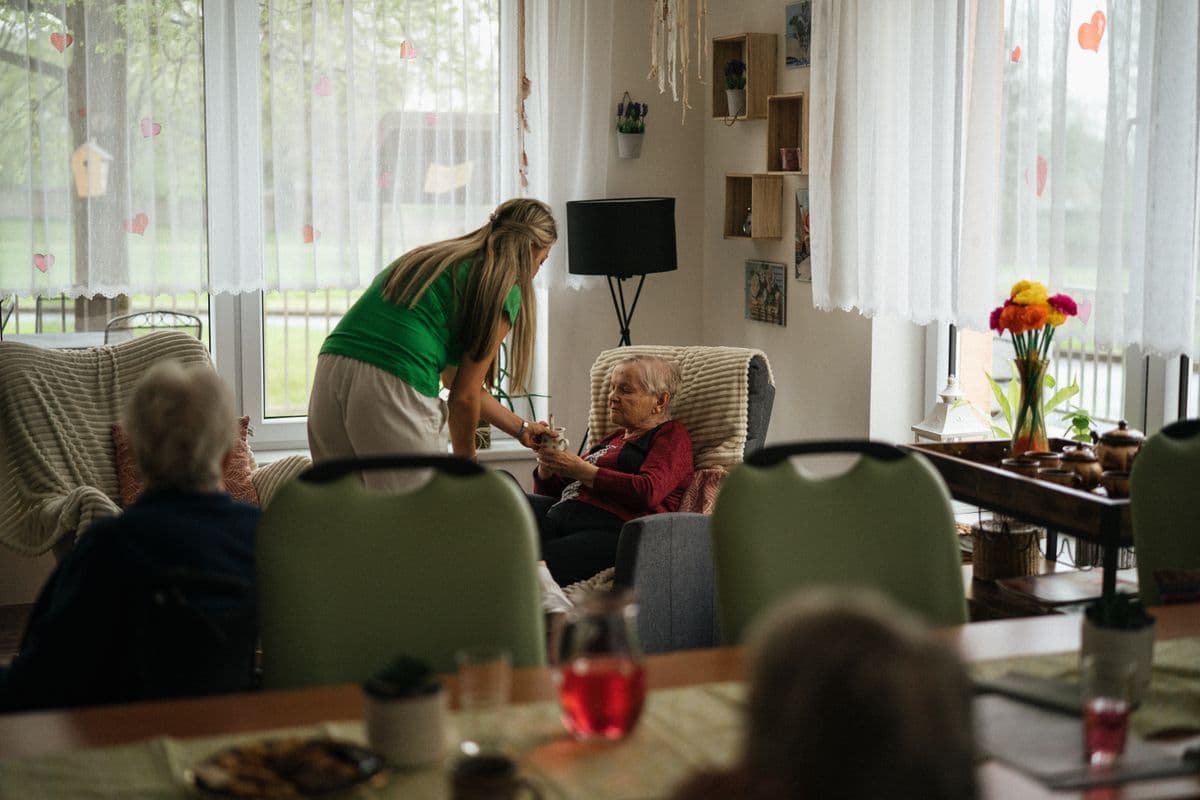
Work as a care helper can be a first step towards the nursing Ausbildung.
Start as an assistant, then become a nurse?
Some readers tell us their many nursing Ausbildung applications brought only rejections. Assistant training can help, but check why you were rejected: ten years of general schooling already meet the school requirement for three-year nursing training under the Nursing Professions Act. If your school certificate is not the problem, helper training will not fix the real reason.
State helper training of at least one year, together with a Hauptschulabschluss, lets you start the nursing Ausbildung. If you ask, it also shortens that training by one third. Our nursing assistants hub explains the helper route.
You can create a free personalised plan at get2germany.com.
Get a personal offer for your next step
Tell us where you are on your way to working in Germany. We will get back to you with a personal offer, by WhatsApp or email.
Can I start with only a 10th-grade certificate?
For the new Pflegefachassistenz, you usually need a Hauptschulabschluss, the German lower school certificate. For the three-year nursing training, the law accepts ten years of general schooling. In both cases the state recognition office decides whether your certificate matches the German one.
Is B1 enough for Pflegefachassistenz?
The official sources we checked do not set a fixed German level for starting Pflegefachassistenz training. Schools and employers set their own, so ask the school for its language requirement in writing before applying for a visa.
Is there a caregiver visa with sponsorship?
No German visa has that name. You need a training or job contract from an employer, then apply through one of the routes above. Most often, that is a training visa or a care helper work visa.
Can I work as a live-in carer from outside the EU?
None of the routes we checked is designed for live-in home care. Many live-in carers in Germany are from other EU countries and need no work permit.
Should I start as a nursing assistant after many rejections?
Starting as a nursing assistant can make sense if you want to enter care sooner, but first check why you were rejected. If you ask, helper training shortens a later nursing Ausbildung by one third.