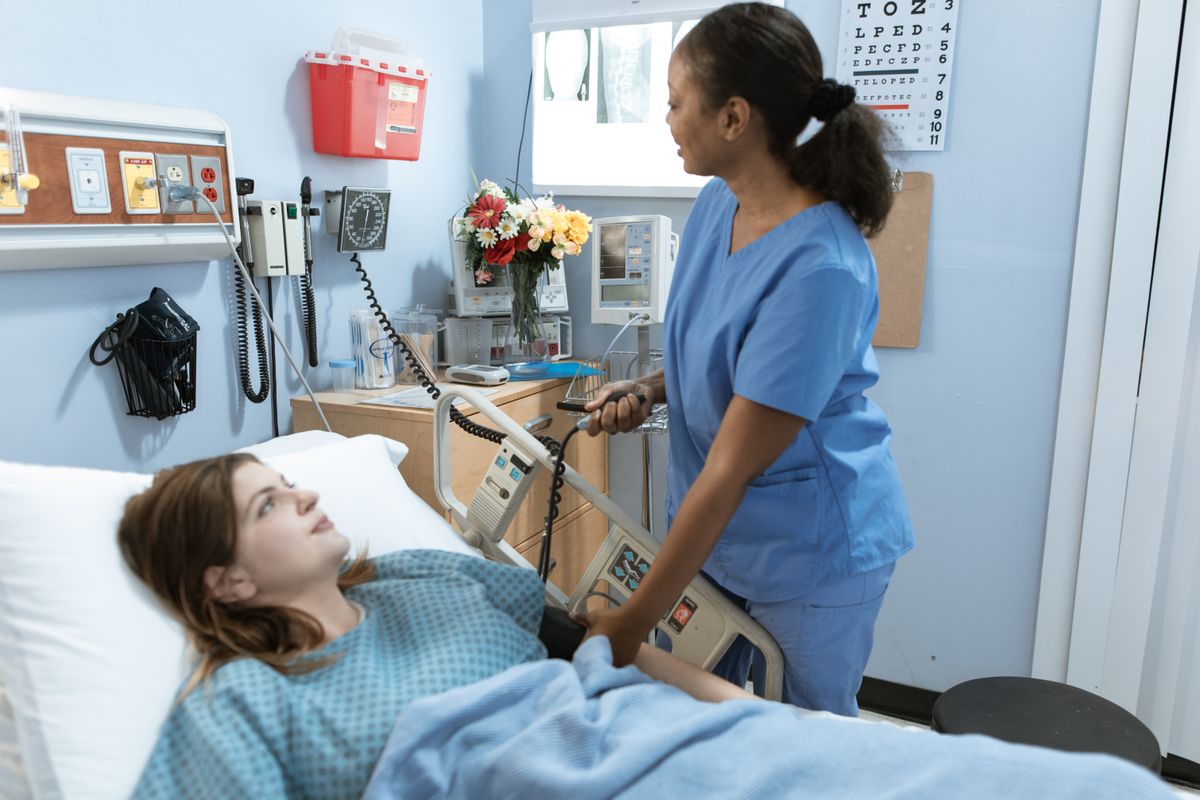
A nursing Ausbildung in Germany is a three-year paid training. It ends with a state exam (the official final exam) and the title Pflegefachfrau or Pflegefachmann (registered nurse). Ausbildung is the German word for vocational training. You can do it as a foreigner if you have:
- at least ten years of general schooling,
- enough German,
- a training contract with a German employer.
With that contract you apply for a training visa. After the exam you can stay and work as a nurse. Do you already hold a nursing degree from your country? Then read the last section first. Getting that degree recognised (officially accepted as equal to the German one) is usually the more direct way.
What the nursing Ausbildung in Germany is
A federal law sets the rules for the training: the Nursing Professions Act (Pflegeberufegesetz). Since 2020 the training is "generalist". That means one training covers hospital care, elderly care and home care, for people of all ages. Before that, Germany had three separate trainings.
Full-time, the training takes three years. Part-time, it takes up to five years. You spend most of the time in practice at your employer. The law calls this employer the Träger der praktischen Ausbildung (the hospital, care home or home-care service that trains you). The rest of the time you have theory and practical lessons at a Pflegeschule (nursing school). During practice, a trained mentor must guide you for at least 10 percent of the time. There are two exams:
- an interim exam (a progress test during the training) at the end of the second year,
- a state exam at the end.
Your contract may include a focus on paediatrics (care of children) or long-term elderly care. Then you may switch for the last year. You then finish with the separate Kinderkrankenpflege (children's nursing) or Altenpflege (elderly care) qualification.

Theory and skills-lab lessons at the nursing school are part of the three years.
Entry requirements for foreigners
The law lists the school certificates that let you start the training (see Sources). Any one of them is enough:
- a mittlerer Schulabschluss (German intermediate school certificate), or a certificate accepted as equal,
- ten years of general schooling,
- a Hauptschulabschluss (lower school certificate) plus a finished two-year vocational training,
- a Hauptschulabschluss plus a state helper or assistant training in nursing of at least one year.
Your foreign certificate has to be accepted as equal. Each German federal state has a Zeugnisanerkennungsstelle (office that recognises school certificates). You find the right office in the anabin database (the official list of foreign schools and degrees). The ZAB (Central Office for Foreign Education) runs this database. Your school or employer will tell you which document they need. A 12th-class certificate covers more than ten years of school. But the office still decides whether it counts as equal.
The law also asks for three more things:
- the German you need for the work,
- good enough health for the job,
- personal suitability (being reliable enough for the job).
The law does not name a German level. Schools and employers set it. Many ask for B1 (intermediate) or B2 (upper-intermediate). Check each offer.
The Nursing Professions Act has no upper age limit. Age matters for only one visa. The job-search visa for a training place is only for people under 35.
- School certificate: What the law says: Ten years of general schooling, or one of the other options above; What schools and employers often add: A statement that your certificate counts as equal
- German: What the law says: The German needed for the job. For the visa: B1, unless the school tested your German or you do a preparatory course; What schools and employers often add: B1 or B2 certificate before the start
- Age: What the law says: No upper limit in the Nursing Professions Act; What schools and employers often add: No legal rule; ask the employer
- Health: What the law says: Good enough health for the job; What schools and employers often add: A medical certificate
How to find a training place
The contract comes first. Without a signed Ausbildungsvertrag (training contract), there is no visa. The contract is between you and the employer. The law lists what it must contain:
- the start date and length,
- working hours,
- probation (trial period),
- holiday,
- notice rules (how early you must say that you are leaving),
- the amount of your training pay.
You can apply directly to hospitals, care homes and home-care services. Use their websites or the job board of the Federal Employment Agency (Bundesagentur für Arbeit). The employer works with a partner nursing school. So in most cases you do not apply to the school separately.
Agency fees and how to protect yourself
A common question we get is about agency fees. German law covers this. An agency that finds you an Ausbildung place may take money only from the employer. This includes the preparation work, such as checking your skills and career advice. Your training contract also cannot make you pay school fees or contract penalties. Contract penalties are fines for breaking the contract. The exact rules are in Sources.
Does an agency ask you for a placement fee (a fee for finding you the place) for a nursing Ausbildung? Then ask in writing what the money is for. A German course is a separate service. Read exactly what any course fee covers.
Two more checks help:
- The Federal Ministry of Health owns the quality seal "Faire Anwerbung Pflege Deutschland" (Fair Recruitment Care Germany). It goes to agencies and employers that follow the employer-pays principle. That means the employer covers all recruitment costs.
- For some countries, only the Federal Employment Agency may recruit for health and care jobs. These countries include Ghana, Nigeria, Pakistan, Nepal and Bangladesh. You can still apply to employers yourself.

The signed training contract comes before the visa application.
The visa for vocational training
With the signed contract, you apply at the German embassy or visa centre. You ask for a residence permit for vocational training. A residence permit is the document that lets you live in Germany. The embassy checklists usually ask for:
- passport, photos and the application form,
- the training contract and the training plan,
- your school-leaving certificate,
- proof of German (B1), or a confirmation that the school checked your German, or proof of a preparatory language course,
- proof of health insurance,
- proof that you can pay your living costs (see the next section),
- a CV and a motivation letter.
Each embassy has its own list. Use the current list from the embassy or consulate in your country.
With this permit you may work up to 20 hours a week in a side job outside the training. Your permit may end early for reasons that are not your fault. Then you get up to six months to look for another training place.
Money to live on: training pay and the blocked account
The employer must pay you appropriate training pay (Ausbildungsvergütung) for the whole three years. The amount is written in your contract. Many employers pay according to a Tarifvertrag (collective agreement, a pay deal between unions and employers). So the pay can differ between employers. If the contract says so, the employer may count free housing or meals as part of the pay. There are legal limits to this.
For the visa you must show that your living costs are covered. Your training pay counts. Is it below the amount the embassy requires? Then you close the gap in one of two ways:
- a Sperrkonto (blocked bank account that releases a fixed sum each month),
- a Verpflichtungserklärung (a formal promise by a sponsor in Germany to pay your costs).
If your pay is high enough, you do not need a blocked account. The required amounts change every year. Check the figure on your embassy's checklist before you apply.
Quitting or changing during the Ausbildung
The first six months are probation. During probation, you or the employer can end the contract at any time. After probation you can quit with four weeks' notice in writing.
Your residence permit is tied to the training. Do you plan to leave or change employer? Then speak to the Ausländerbehörde (local foreigners' office) before you sign anything. Ask them what the change means for your permit.
Burnout and quitting come up often in the questions trainees send us. Is the training harder than you expected? Talk first to your Praxisanleitung (practice mentor) or the nursing school.
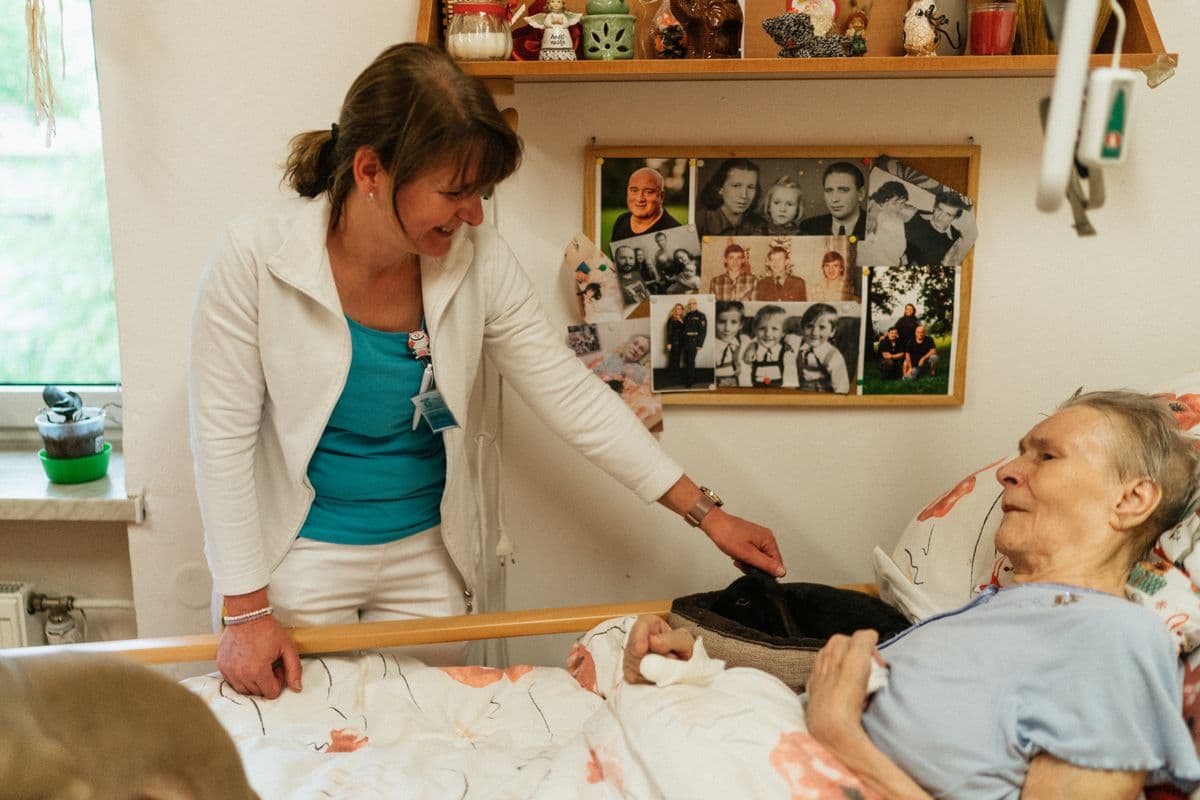
The generalist training covers hospital care, elderly care and home care.
After the exam: work and settlement
After you pass the state exam, you must also meet the rules on German, health and reliability. Then the office gives you the Erlaubnis (licence) to use the title Pflegefachfrau or Pflegefachmann. With it you can work as a nurse anywhere in Germany.
No job yet? You can get a residence permit for up to 18 months to look for one. Once you have a job, you move to the skilled-worker visa.
Later you can apply for a Niederlassungserlaubnis (permanent settlement permit). If you finished your training in Germany, you need:
- two years with a skilled-worker permit,
- 24 months of pension contributions (payments into the state pension),
- B1 German,
- the general conditions for settlement.
People with foreign training wait three years.
The alternative: a nursing degree at a university
The Nursing Professions Act also has a university route to the same licence. It is a primärqualifizierendes Pflegestudium (a university degree that itself qualifies you as a nurse). It lasts at least three years. It mixes university study with practice placements. The final exams include the state exam for the licence.
You also sign a contract with a practice employer. This employer must pay you every month for the whole degree. You need admission from the university. That usually means a school certificate that lets you study at a university. The visa is then usually the student visa, not the training visa.
When direct recognition is the better route
If you already hold a full nursing qualification, start with recognition rather than a new three-year Ausbildung. The state authority compares your foreign training with the German qualification. If it finds substantial differences, you may need an adaptation course or a knowledge test; relevant professional experience can also compensate for some differences. Once your file is complete, the authority generally has up to four months to decide.
An Ausbildung is meant for people entering the profession for the first time. It may still make sense if your previous course was not a full nursing qualification. In that case, the authority can sometimes credit earlier training and shorten the programme, in some cases by up to two thirds. The nurses hub covers the recognition route in detail.
Get a personal offer for your next step
Tell us where you are on your way to working in Germany. We will get back to you with a personal offer, by WhatsApp or email.
Is a nursing Ausbildung in Germany worth it?
It is paid for the whole three years. It leads to a state licence. After a German Ausbildung, you can apply to settle (get permanent residence) after two years of skilled work. The price is three years of training in German, with shift work. If you already hold a nursing degree, recognition is usually faster.
Which school certificate do I need, for example 12th class?
The legal minimum is ten years of general schooling, or a certificate that counts as equal. A 12th-class certificate is more than that. But the recognition office of the federal state decides whether it counts as equal.
What German level do I need to start?
The Nursing Professions Act asks for the German needed for the job. It names no level. For the visa you need B1. This does not apply if the school tested your German or you join a preparatory course. Many employers ask for B1 or B2.
Do I get paid during the Ausbildung?
Yes. The employer must pay appropriate training pay for the whole training. The amount is set in your contract, often by a collective agreement.
Can an agency charge me for finding a training place?
Agencies may charge only the employer for placing you into an Ausbildung. Is an agency asking you for any other fee? Ask for it in writing and check what it covers.