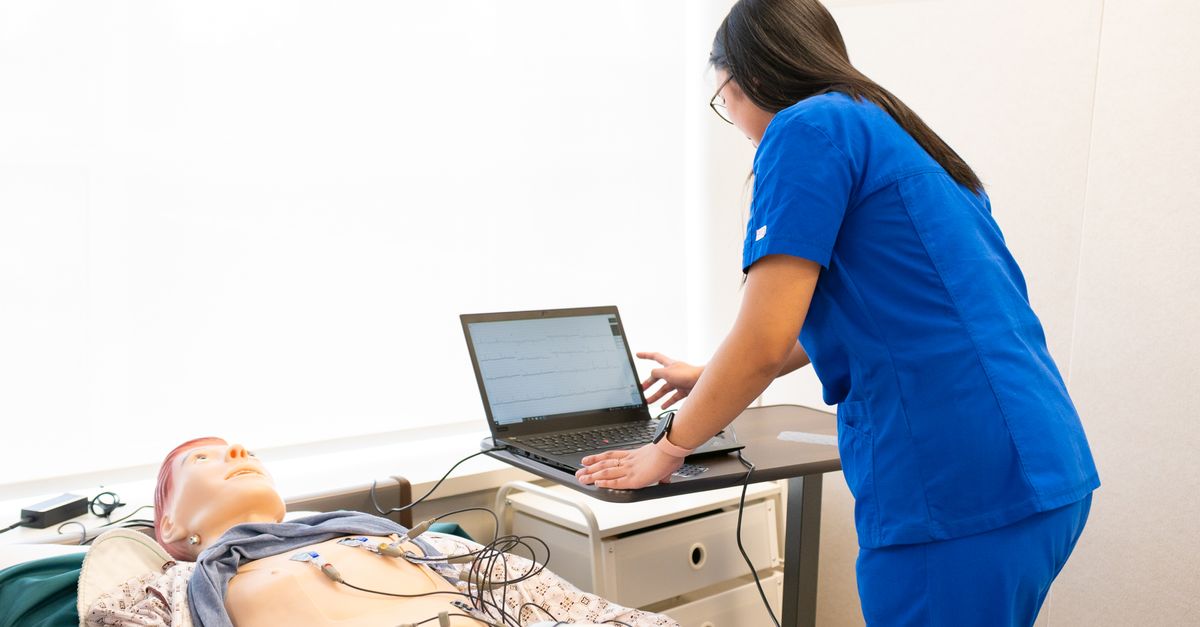
A Defizitbescheid is a letter from a German office (the state office that decides on recognition). The office sends this letter after it compares your foreign health qualification with the German one and finds important gaps. It is not a refusal. The letter lists the gaps and tells you how to close them. Usually you do this with an exam (Kenntnisprüfung) or a supervised training period (Anpassungslehrgang). After you close the gaps and meet the other conditions, you can get your German license.
For applications submitted from 1 November 2026, a new law changes this for doctors, dentists and pharmacists from outside the EU (Bundesgesetzblatt 2026 I Nr. 225). The direct Kenntnisprüfung (knowledge examination) becomes the normal route, instead of a document check first. You can still ask for a full document check, but only within four weeks of applying.
This guide explains the Defizitbescheid in English for nurses, physiotherapists, medical technologists, midwives, paramedics, pharmacists, dentists and doctors. The details differ by profession. The Sources at the end list the law for each profession.
What "Defizitbescheid" means in English
"Defizitbescheid" is the everyday word. The official name is longer, for example "Bescheid über wesentliche Unterschiede" (notice of substantial differences). In English you will also see "deficit notice" or "notice of partial equivalence". All of these mean the same thing. Your training is close to the German training, but not close enough for a license yet.
The notice is a formal decision (Bescheid). That matters for two reasons:
- you can challenge it,
- it has deadlines attached.
For nurses, the law says what the notice must contain. The German nursing training and exam regulation says the notice must state:
- the level of your qualification and the German level,
- the subjects or areas where the office found substantial differences,
- what those differences are,
- why your work experience or later training did not make up for them.
The laws for other professions say less about this. But the notice always has to name the differences. If yours only says "not equivalent" without details, ask the office to explain.
Which professions get one
A notice listing substantial differences is most common in regulated professions, including nursing, physiotherapy, medical technology, midwifery, emergency care, pharmacy, dentistry and medicine. Non-regulated professions can also receive a formal notice of partial equivalence. In that case, the notice describes the differences, but you may still work in the occupation because no professional licence is required.
Each profession has its own federal law. The state office where you applied uses that law. That is why two people from the same country can get slightly different notices in two states.

Read the notice slowly: the gaps it lists decide your next step.
How to read your Defizitbescheid
Most notices follow a similar order. Read it with a pen and look for these parts.
- Referenzberuf (German reference profession): What to check: Is it the right one? For nurses this is usually Pflegefachfrau / Pflegefachmann (registered nurse).
- Wesentliche Unterschiede (substantial differences): What to check: Which subjects, practice areas or hours are missing. This decides what you must learn.
- Ausgleichsmaßnahme (the course or exam that closes your gaps): What to check: Which options you have: Kenntnisprüfung, Anpassungslehrgang or Eignungsprüfung (aptitude test).
- Dauer (duration): What to check: If an Anpassungslehrgang is offered, how many months the office set.
- Other conditions: What to check: Missing documents, German language proof, health certificate or police record.
- Rechtsbehelfsbelehrung (instructions on how to challenge the decision): What to check: Whether you can file a Widerspruch (formal objection) or must go to court, and the deadline.
The notice is in German. A translation app helps you understand it. But check the key words (the course or exam, the months, the deadline) with the office or a recognition counselling service. The official portal anerkennung-in-deutschland.de lists free counselling services.
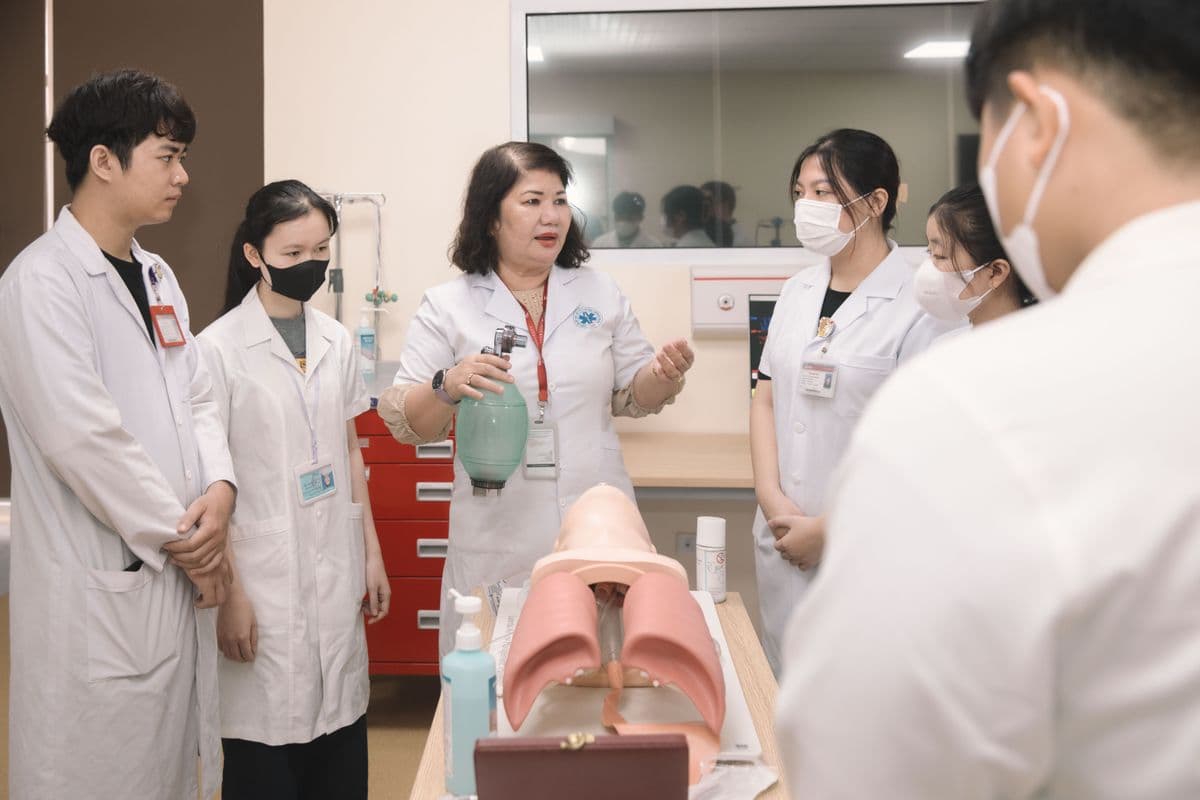
Skills practice helps with both the Kenntnisprüfung and the Anpassungslehrgang.
Kenntnisprüfung or Anpassungslehrgang: who gets the choice
The Ausgleichsmaßnahme (the course or exam you were given) is how you prove that you have closed the gaps. There are three types:
- Kenntnisprüfung: a knowledge examination whose scope is set by the law for the profession. For doctors, dentists and pharmacists it is tied to the content of the German state examination, so it is not necessarily limited to the gaps listed in your notice.
- Anpassungslehrgang: you work in the profession under supervision, sometimes with classes. It lasts at most three years. The office sets the length based on your gaps.
- Eignungsprüfung: an aptitude test for qualifications from the EU, the EEA (European Economic Area) or Switzerland. It covers only the differences found.
Whether you can choose depends on your profession and where you trained. For qualifications from a country outside the EU, the EEA and Switzerland, the laws say this:
- Nurses: Where to read the rule: Nursing Professions Act; Course or exam for a qualification from outside the EU: Kenntnisprüfung or Anpassungslehrgang (at most 3 years); Can you choose?: Yes
- Physiotherapists: Where to read the rule: Physiotherapists Act; Course or exam for a qualification from outside the EU: Kenntnisprüfung or Anpassungslehrgang (at most 3 years); Can you choose?: Yes
- Paramedics: Where to read the rule: Paramedics Act; Course or exam for a qualification from outside the EU: Kenntnisprüfung or Anpassungslehrgang (at most 3 years); Can you choose?: Yes
- Midwives: Where to read the rule: Midwives Act; Course or exam for a qualification from outside the EU: Kenntnisprüfung or Anpassungslehrgang (at most 3 years); Can you choose?: Yes
- Medical technologists: Where to read the rule: Medical Technologists Act; Course or exam for a qualification from outside the EU: Kenntnisprüfung or Anpassungslehrgang (at most 3 years); Can you choose?: Yes
- Doctors, dentists, pharmacists: Where to read the rule: Federal Medical Code, Dentistry Act, Federal Pharmacists Code; Course or exam for a qualification from outside the EU: Exam on the content of the state exam (Kenntnisprüfung); Can you choose?: No
EU, EEA and Swiss qualifications may qualify for automatic recognition when the diploma meets the relevant European rules. If automatic recognition does not apply and substantial differences remain, the authority may require an aptitude test or adaptation course. The exact choice depends on the profession; an aptitude test is not mandatory for every EU-trained doctor, dentist or pharmacist.
Two recent changes affect your options:
- Since 16 December 2023, nurses can skip the document check completely. They go straight to a Kenntnisprüfung or Anpassungslehrgang. This decision cannot be undone, so think before you sign it.
- A federal law of 22 July 2026 changes the rules for applications made from 1 November 2026 (see above and Sources). Midwives from outside the EU can also skip the document check for good. They go straight to a Kenntnisprüfung or Anpassungslehrgang.
Applications made by 31 October 2026 follow the old rules.
How to decide
The Kenntnisprüfung is usually the shorter path if your clinical skills and your German are strong. For nurses it has an oral part and a practical part, usually with real patients. The Anpassungslehrgang takes longer. But you learn the German way of working on the ward. It also ends with an assessment. Before you choose, compare:
- the cost,
- the courses near you,
- how confident you feel in German.
Doctors can read our guide to the Kenntnisprüfung for doctors.
Deadlines that matter
The office must decide on your application within four months after it has all your documents (§ 43 PflAPrV for nursing; a similar rule applies for doctors). This four-month deadline is for the office's decision, for example your Defizitbescheid; it is not the time until you finish the Kenntnisprüfung or Anpassungslehrgang and get your license. The four months start only when your file is complete. So missing papers delay everything.
To challenge the notice, you usually have one month after you received it. Some states still use a Widerspruch (formal objection). You send it to the office. Other states have removed this step for many decisions. Then you go to the administrative court directly, also within one month. Your Rechtsbehelfsbelehrung (the part on how to challenge the decision) tells you which way applies. If that part is missing or wrong, the deadline becomes one year. These rules are in the Code of Administrative Court Procedure (see Sources).
For nurses there is one more rule. The state must make it possible to take the Kenntnisprüfung within six months of the notice.
With a Defizitbescheid you can apply for a visa to close the gaps in Germany.
Can you come to Germany with a Defizitbescheid?
Yes. The Residence Act has a residence permit for this: the visa for doing an adaptation course or exam in Germany. A residence permit is the document that lets you live in Germany for a set purpose. You need:
- a notice that says you must do a course or exam to close gaps,
- a place in a suitable course, adaptation period or exam,
- in most cases, at least basic German (level A2),
- approval from the Federal Employment Agency, if the course is mainly practical work in a company.
The permit is given for up to 24 months. It can be extended by up to 12 months at a time, to a maximum of three years. You also need to show you can pay your living costs. The German embassy tells you how.
If you only need to take an exam, there is a separate permit for the exam. That permit does not allow work.
A different route is the recognition partnership visa (Anerkennungspartnerschaft). It has existed since 1 March 2024. Here you start the recognition procedure after you arrive. At the same time, you already work for an employer who supports it.
Can you work while you close the gaps?
Until you have your German license, you may not work under the protected title, for example "Pflegefachfrau" or "Pflegefachmann". You can work in a helper or assistant role if an employer hires you for it.
With the visa for an adaptation course or exam, the law allows two kinds of work:
- a side job of up to 20 hours a week that is not part of the course or exam,
- work without an hour limit in a job related to your future profession. This needs approval from the Federal Employment Agency.
Before you plan the money side, read our post on financial support during recognition. Course fees and exam fees differ by state and provider.
After you close the gaps
When you pass the course or exam, you get a certificate. You send it to the office. The office then checks the rest: German language, a health certificate, and proof of good character. For nurses in Bavaria, for example, the state office asks for an upper-intermediate German certificate (level B2) before it issues the license document. Doctors also need a medical language exam (Fachsprachprüfung). Then you receive your Erlaubnis (license to use the professional title). Doctors, dentists and pharmacists receive the Approbation (full license to practise).
If you want a step-by-step plan for your profession and state, you can build a free personalised roadmap at get2germany.com/en/my-roadmap.
Got a Defizitbescheid? Get a personal plan for your next step
Tell us where you are on your way to working in Germany. We will get back to you with a personal offer, by WhatsApp or email.
What is a Defizitbescheid in English?
It is a "notice of substantial differences" or "partial equivalence notice". It says your foreign health qualification has gaps compared with the German one. It also lists how you can close them.
How long does it take to get a Defizitbescheid?
The office must decide on your application within four months after your documents are complete (§ 43 PflAPrV for nursing). This is the deadline for the office's decision, not the total time until you finish the Kenntnisprüfung or Anpassungslehrgang and get your license. Waiting for missing papers or translations adds time.
Kenntnisprüfung or Anpassungslehrgang: which one should I choose?
Nurses, physiotherapists, paramedics, midwives and medical technologists from outside the EU can choose. The exam is usually faster if your skills and German are strong. The Anpassungslehrgang takes longer, but it trains you in a German workplace. For applications submitted from 1 November 2026, doctors, dentists and pharmacists from outside the EU normally go straight to the exam; they can still ask for a full document check within four weeks of applying.
What happens if I fail the Kenntnisprüfung?
For nurses, you can repeat the oral part once and each failed practical situation once (§ 45 PflAPrV). Some states instead use a practical exam with five stations (Parcoursprüfung, § 45a PflAPrV); there you repeat the whole exam once if you fail, not single stations. Ask your office what happens after that. Other professions have their own rules in their exam regulations.
Can I come to Germany with a Defizitbescheid?
Yes, with the visa for doing an adaptation course or exam in Germany. You usually need basic German (level A2), a place in a course or exam, and enough money to live on. The permit lasts up to three years in total.
Can I work while I close the gaps?
Yes, with limits. On this visa you may work up to 20 hours a week on the side. With approval, you may work more hours in a job related to your future profession. You may not use the protected professional title yet.