The Kenntnisprüfung for nurses is a state exam in Germany. It is for nurses trained outside the EU. In the standard format, it has two parts:
- an oral part,
- a practical part with real patients.
Since December 2023, a state can instead run it as a Parcoursprüfung (practice-based circuit exam): a simulation exam with five stations (§ 45a PflAPrV). Your office tells you which format applies.
If you pass both parts and meet the other conditions, you can get the license to work as Pflegefachfrau or Pflegefachmann (registered nurse). The other way to close the gaps is the Anpassungslehrgang (a supervised training period).
This post covers the nursing exam only. Doctors have a different Kenntnisprüfung with different rules. For nurses, the rules are in the Nursing Professions Act (Pflegeberufegesetz). The exam itself is set out in the nursing training and exam regulation (Pflegeberufe-Ausbildungs- und Prüfungsverordnung). The exact sections are in Sources.
Who takes the Kenntnisprüfung
You take it if all three are true:
- You trained as a nurse in a country outside the EU, the European Economic Area (EEA) and Switzerland.
- The office that decides on recognition (a state office) found big differences from the German training. It sent you a Defizitbescheid (a letter listing those gaps). Or you gave up the document check.
- You chose the exam instead of the Anpassungslehrgang.
By law, the choice between the exam and the course is yours. Since 16 December 2023 you can also skip the document check. You then go straight to the exam or the course. You cannot undo this choice later.
Nurses with qualifications from the EU, EEA or Switzerland do not take a Kenntnisprüfung. If they have gaps, they choose between an Anpassungslehrgang and an Eignungsprüfung (aptitude test) instead.
What the exam covers
The Kenntnisprüfung covers the content of the German state final exam. But it is not a full final exam. For the general nursing license, it tests five competence areas (areas of skill). They are listed in Anlage 2 (Annex 2) of the nursing exam regulation. In short, they are:
- Planning, carrying out and evaluating (checking) the nursing process in acute and long-term care.
- Communication and advice with patients and families.
- Working with other nurses and other professions.
- Acting within German laws, rules and ethical guidelines.
- Basing your work on research and professional ethics.
Do you apply for a specialised license? Then Anlage 3 or 4 applies instead. Examples are Gesundheits- und Kinderkrankenpflege (children's nursing) and Altenpflege (elderly care).
People often look for an official question bank for the Kenntnisprüfung. There is none. The official topic list is Anlage 2 of the nursing exam regulation, free to read.
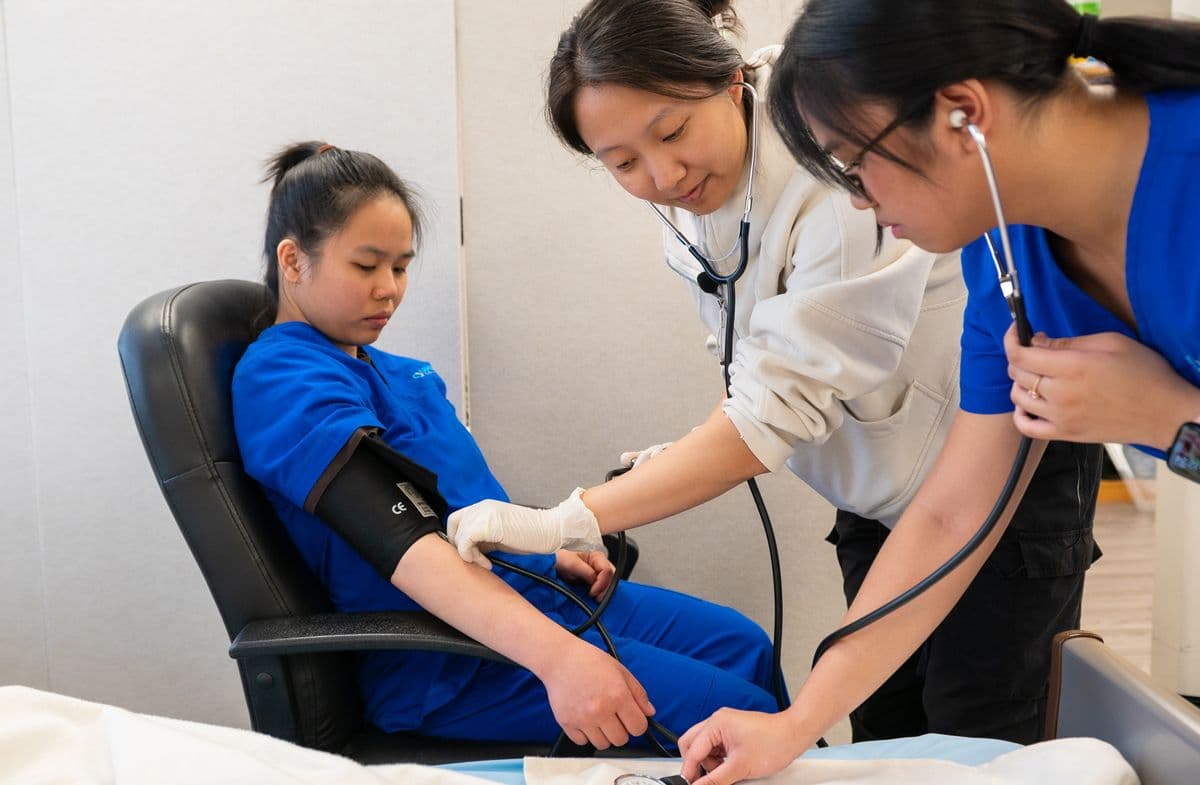
The exam tests the whole nursing process, from planning to hands-on care.
Kenntnisprüfung for nurses: the standard format
The exam has two parts. You must pass both.
- What you do: Oral part: Solve one complex case task that covers at least three competence areas; Practical part: Care for patients in 2 to 4 care situations
- Length: Oral part: 45 to 60 minutes; Practical part: Up to 120 minutes per situation
- Examiners: Oral part: Two; Practical part: Two (a teacher and a practice examiner)
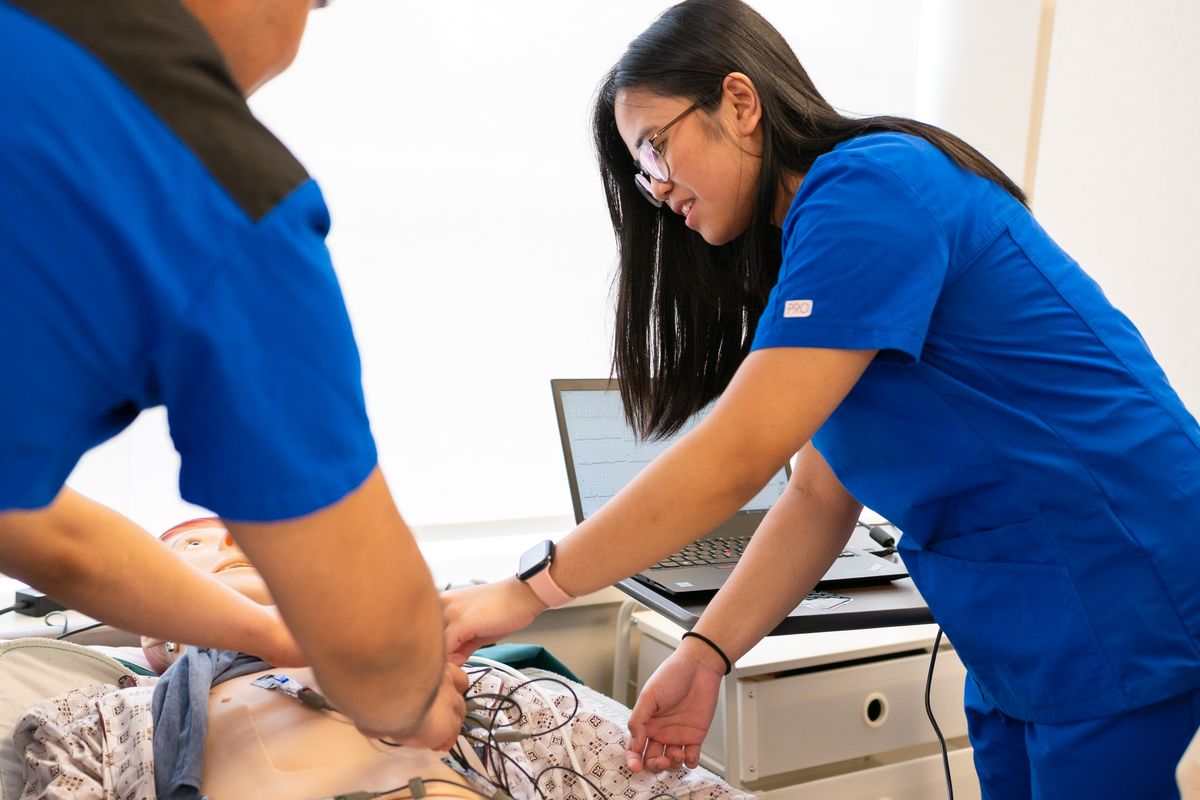
- Where: Oral part: A nursing school or a similar place; Practical part: Usually with real patients in a care facility; a simulation only if the office approves it
- Retake: Oral part: Once; Practical part: Each failed situation once
The case in the oral part comes from a different care setting than your practical part. For the general nursing license, it also involves a different age group. The office decides where the practical part takes place. It also decides how many situations you get. Examiners may ask follow-up questions.
The result is "bestanden" (passed) or "nicht bestanden" (failed). A part counts as passed only if all examiners rate it as passed. States must offer the exam at least twice a year. They must also make it possible for you to sit the exam within six months of your notice.
The Parcoursprüfung
Since December 2023, a state can run the Kenntnisprüfung in a different way, as the Parcoursprüfung: a simulation exam with five stations. At each station you have 30 minutes. Then you have 5 minutes to move to the next one. Simulated patients may be used. Two examiners score you at every station. You must pass every station.
The retake rule is stricter here. If you fail, you repeat the whole circuit once, not single stations. Your office tells you which format it uses.
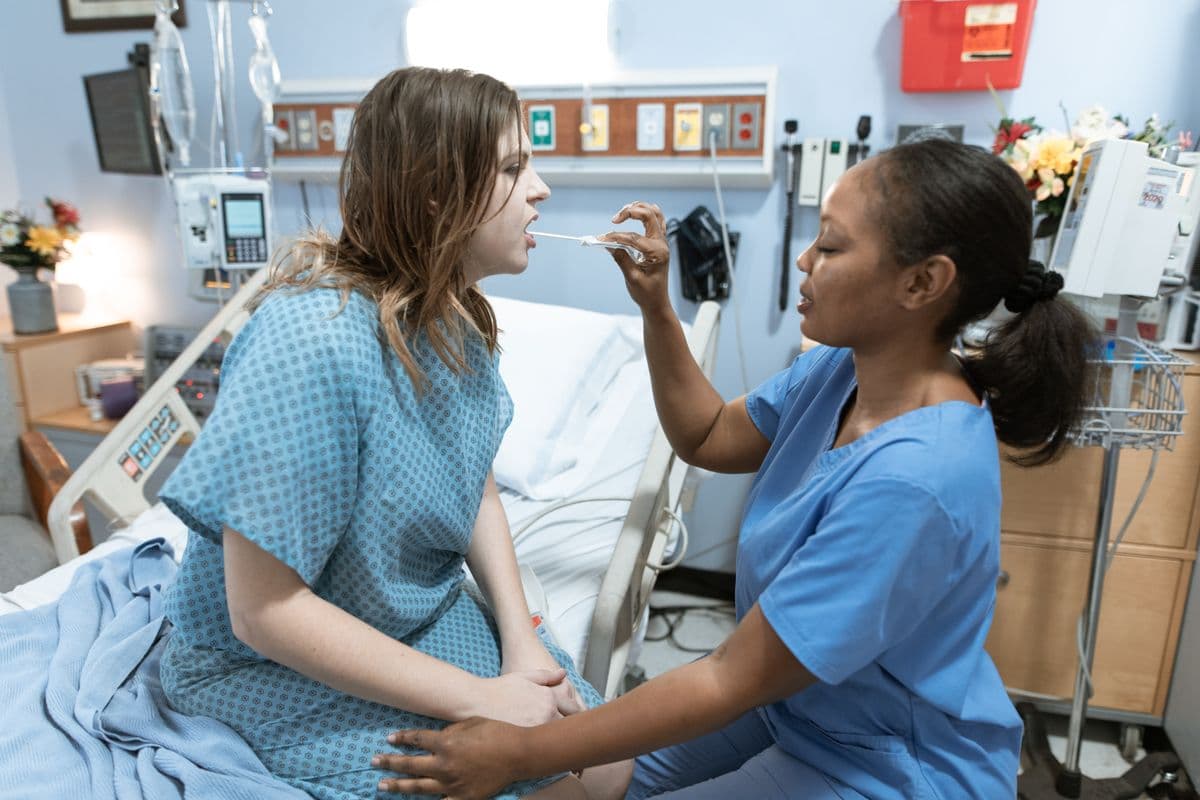
In the Anpassungslehrgang you work on a ward under supervision.
The Anpassungslehrgang: the alternative
In the Anpassungslehrgang you work as a nurse under supervision. It can include classes, but does not have to. You do it at approved facilities. By law it lasts at most three years. The office sets the length and content based on your gaps. Within a set range, it can allow a shorter or longer course.
The course ends with an Abschlussgespräch (final assessment talk). You talk with an examiner and a teacher or practice supervisor. If you do not pass, the course can be extended once. After that you have a second talk. If you fail again, you can repeat the course once.
Exam or course: how to choose
- Time: Kenntnisprüfung: Shorter if you are well prepared; Anpassungslehrgang: Months, up to 3 years
- Pressure: Kenntnisprüfung: High, on a few exam days; Anpassungslehrgang: Spread over the course
- Learning the German ward routine: Kenntnisprüfung: Only what your prep course teaches; Anpassungslehrgang: Part of the course
- Retakes: Kenntnisprüfung: Once per part (Parcoursprüfung: whole circuit once); Anpassungslehrgang: One extension, then the whole course once more
The exam suits you if:
- your clinical skills are strong,
- your German is good,
- you can find a prep course.
The course suits you if your gaps are large. It also suits you if you want time to settle into German care practice. Before you decide, ask your office how long your Anpassungslehrgang would be.

Start from the official topic list and the gaps named in your notice.
How to prepare
Prepare from the official competence areas in Anlage 2. The Kenntnisprüfung is based on the content of the German state final examination, so it is broader than a test of only the differences named in your notice. Use the notice to plan extra study, but do not treat it as the exam syllabus.
The practical part checks the whole nursing process:
- you plan the care,
- you carry it out, including basic care (Grundpflege),
- you write down what you did (documentation).
Practise this on a German ward if you can.
Prep courses exist at nursing schools, education providers and some employers. A course can combine three things: theory, skills lab training (practice on models and equipment) and a placement (a work period on a ward). Courses differ in length, price and quality. Ask any provider two questions. How many of its participants sat the exam? Which format does your state use? Does a recruiting agency offer the course? Then check whether it holds the state seal "Faire Anwerbung Pflege Deutschland" (Fair Recruitment of Nurses in Germany). Under that seal, the employer pays the recruitment costs, not you.
Language matters as much as nursing knowledge. The exam regulation does not set a German level for the exam itself. But the exam is in German, and you talk to patients and examiners. Prep courses often ask for a certain German level before you can join. Ask the provider. For the license itself, states ask for proof of German. For example, the Bavarian state office for nursing asks for a B2 (upper-intermediate) certificate. Our guide to the German B2 exam explains the common certificates.
Costs depend on your state and provider. Some funding programmes help with recognition costs. See financial support for recognition.
Coming to Germany for the exam
Are you still abroad? Then you can get the visa for doing an adaptation course or exam in Germany. It covers, for example, a prep course or the exam. This visa is a residence permit. A residence permit is the document that lets you live in Germany for a set purpose. The main rules:
- For a prep course plus exam, it lasts up to 24 months. You can extend it to three years in total.
- You usually need at least basic German (level A2).
- You may work up to 20 hours a week on the side.
- You may work more in a related job, for example as a nursing assistant. The Federal Employment Agency must approve this.
Do you only travel to sit the exam? Then there is a separate visa just for the exam. It does not allow work.
Until you pass and receive your license, you may not use the title Pflegefachfrau or Pflegefachmann. You can work in an assistant role if an employer hires you, for example as a nursing assistant.
After you pass
You receive a certificate (the form is in Anlage 10 of the nursing exam regulation). Send it to your office. The office then checks three things:
- your German,
- a medical certificate,
- proof of good conduct (usually a police certificate).
If all is in order, you receive the Erlaubnis zum Führen der Berufsbezeichnung (license to use the title) as Pflegefachfrau or Pflegefachmann. With it you can work as a registered nurse anywhere in Germany. More on the profession is on our nurses page.
To see your own steps by country and state, you can build a free personalised roadmap at get2germany.com/en/my-roadmap.
Exam or adaptation course? Get a personal plan
Tell us where you are on your way to working in Germany. We will get back to you with a personal offer, by WhatsApp or email.
What is the Kenntnisprüfung for nurses?
It is a state exam for nurses trained outside the EU who have gaps compared with the German training. In the standard format, it has an oral part and a practical part. Some states instead use the Parcoursprüfung, a simulation exam with five stations (§ 45a PflAPrV). Passing it is one step towards the German nursing license.
How many times can I retake the Kenntnisprüfung?
In the standard format you can retake the oral part once. You can also retake each failed practical situation once. In the Parcoursprüfung (circuit exam) you repeat the whole exam once.
Is there a free PDF of Kenntnisprüfung questions?
There is no official question bank. The official topics are in Anlage 2 of the nursing exam regulation, free on gesetze-im-internet.de. Your notice helps identify weak areas, but the Kenntnisprüfung covers the German final-exam content. By contrast, the Eignungsprüfung for eligible EU, EEA and Swiss qualifications is limited to the substantial differences identified by the authority.
Kenntnisprüfung or Anpassungslehrgang: which is better?
Neither is better for everyone. The exam is usually faster if you are well prepared. The Anpassungslehrgang takes longer, up to three years, but you learn on a German ward. By law, the choice is yours.
Which German level do I need?
The exam regulation sets no level for the exam itself. But the exam is held in German. Prep courses often set their own entry level. For the license, states ask for proof of German. Bavaria asks for B2.
Can I take the exam in English?
The exam regulation has no English option. Plan to take it in German.