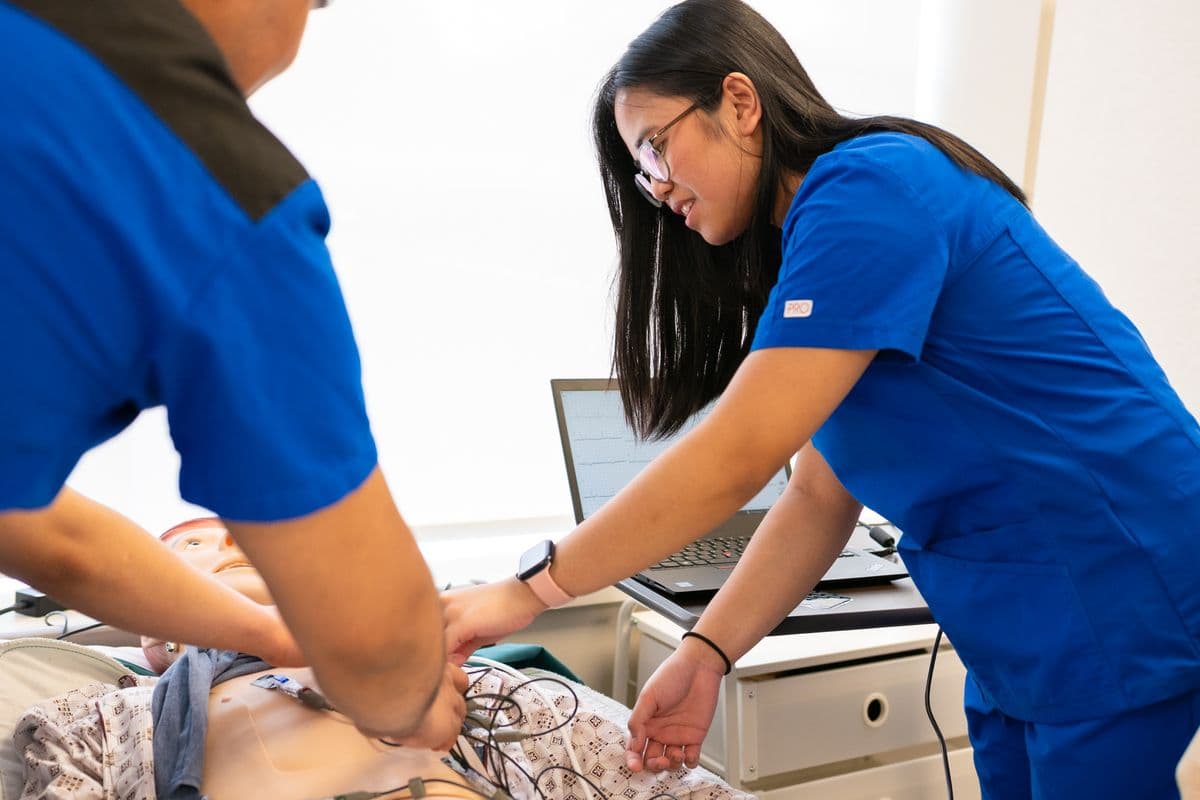
International students can study nursing in Germany in two main ways:
- The three-year vocational training (Ausbildung, training at a nursing school and in hospitals) to become a Pflegefachfrau or Pflegefachmann (registered nurse).
- A nursing bachelor's degree (primärqualifizierendes Studium, a degree that qualifies you as a nurse). It leads to the same licence.
Both need a recognised school certificate and German. Most people from outside the EU also need a residence permit for vocational training or for study. This post covers both routes, the entry requirements, training pay and the visa.
The three-year vocational training (Pflegefachfrau/Pflegefachmann)
Since 1 January 2020, nursing training in Germany follows the Nursing Professions Act (Pflegeberufegesetz). It leads to one generalist qualification: Pflegefachfrau or Pflegefachmann. Generalist means you learn to care for people of all ages, in hospitals, in long-term care and in care at home. This is the protected title. "Pflegefachkraft" is a common word for a nurse, but it is not the protected title.
The training takes three years full-time, or up to five years part-time. This is true no matter when the final state exam takes place. You learn theory at a nursing school. You also do practical placements in:
- acute care (hospitals)
- long-term care
- care at home (outpatient care)
- paediatric or psychiatric care
The nurses hub also summarises this.
The bachelor's degree route (primärqualifizierendes Studium)
For a primary-qualifying nursing degree, the Nursing Professions Act requires a training contract with the provider of the practical part and appropriate monthly pay for the whole contract (see Sources). That rule applies to the primärqualifizierendes Studium, not to every degree with “nursing” in its name, so check the programme type before applying. The residence route is also different: applicants from outside the EU, EEA and Switzerland normally use the student residence permit for the university degree, while a separate residence permit covers vocational training instead (see Sources). EU, EEA and Swiss citizens do not need either residence permit. See the rule on the practical-training contract and the federal vocational-training visa guidance.
The Nursing Professions Act also created a university route to the same licence: the primärqualifizierendes Pflegestudium (nursing bachelor's degree). It started on 1 January 2020, next to the vocational training. The training and exam regulation for nursing (PflAPrV) sets out more details (see Sources).
The degree covers the same core skills as the vocational training and is meant to go further. Universities can add more content. A state exam is part of the degree. If you pass it and finish the degree, you can apply for the same permission (Erlaubnis) to use the title Pflegefachfrau or Pflegefachmann as someone from the vocational route. Most programmes take around three and a half years. Like the vocational training, they mix theory with practical placements, but at degree level.
Both routes lead to the same protected title and allow the same work. Which one fits you depends on two things:
- whether you have a university entrance qualification (Hochschulzugangsberechtigung, a school certificate that lets you study at university)
- whether you prefer learning at a school and in clinics, or studying for a degree

The bachelor's route leads to the same nurse licence as the vocational training.
Entry requirements
For the vocational training, the Nursing Professions Act asks for one of these:
- a German mittlerer Schulabschluss (the school-leaving certificate after year 10)
- a Hauptschulabschluss (the basic school-leaving certificate) plus certain vocational or assistant training
- ten years of general schooling
Did you get your school certificate outside Germany? Then it must be checked as equal to one of these. This check is separate from the recognition of university degrees. It is done as part of your application to the training provider or by the responsible state office. It does not go through anabin (the database for foreign university degrees).
For the bachelor's route, you need a university entrance qualification. If you got it abroad, it is also checked.
Neither route has an age limit. The law only lists the school certificate.
German language. The federal recognition portal lists B2 German. But that rule is for people who already finished nursing training abroad and want it recognised. It is not for someone who starts training in Germany as a student.
To start the training, the level depends on the training provider. If you need a visa, it also depends on the German embassy or consulate (the German mission) that handles your application. Guidance for vocational training often says at least intermediate German (level B1). Some states or nursing schools ask for upper-intermediate German (level B2), because the course has a lot of clinical content. Check the exact level with the nursing school, and with the German mission in your country if needed, before you sign up for a language course.

Many nursing schools expect at least B1 German before you start.
Training pay (Ausbildungsvergütung)
Nursing training in Germany is a paid apprenticeship when it follows the public-sector pay agreement. You do not pay tuition fees for it. The pay agreement for trainees in public-sector nursing is called TVAöD Besonderer Teil Pflege. Gross monthly training pay from 1 May 2026 is:
- year one: €1,490.69
- year two: €1,552.07
- year three: €1,653.38
The official VKA reading version of the agreement confirms these amounts from 1 May 2026. Pay can also be different at employers that do not follow this agreement. See the nurse salary post for what you can earn once you are qualified and employed.
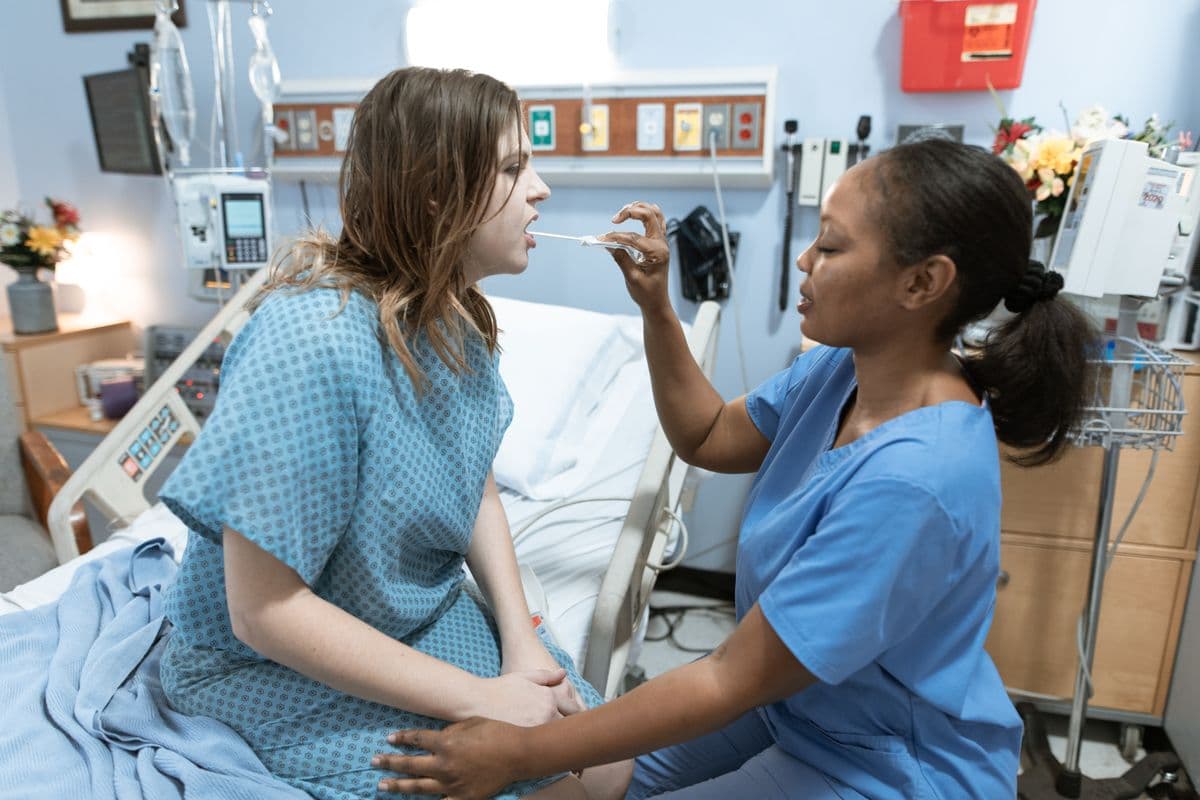
Nursing trainees are paid while they learn on the wards.
The visa for vocational training
Are you not an EU, EEA or Swiss citizen? Then you usually need a residence permit for vocational training to study nursing in Germany (see Sources). This permit is given for:
- in-company training that the Federal Employment Agency (Bundesagentur für Arbeit) approves, or that a special rule exempts from this approval
- German courses that prepare you for a training place
With this permit, you may work up to 20 hours a week in a job outside your training. If you lose your training place and it is not your fault, you get up to six months to find a new one before your permit is affected.
The law itself does not set a German level or an amount of money for living costs. In practice, you are usually asked for:
- a German certificate, often at least B1, or proof that you are registered for a German preparation course
- proof that your living costs are covered. The amount is linked to the BAföG rate (the state support rate for students), which changes from time to time.
The exact euro amount and the proof you can use differ by German mission and by case. Proof can be a blocked account (a bank account you can only take a fixed amount from each month), a declaration of commitment (Verpflichtungserklärung, where someone promises to pay your costs), or a training allowance that already covers your costs. Check the current rules with the German mission in your country before you apply.
Start planning your route
Studying nursing in Germany comes down to three steps:
- Choose between the vocational route and the bachelor's route.
- Meet the school-certificate and language requirements.
- If you are from outside the EU, EEA or Switzerland, check the entry and residence route for your programme: the student route for a bachelor's degree or the vocational-training route for an Ausbildung.
For what comes after training, including recognition if you later move to another country, see the nurses hub.
Get a personal offer for your next step
Tell us where you are on your way to working in Germany. We will get back to you with a personal offer, by WhatsApp or email.
What are the requirements to study nursing in Germany as an international student?
You need a school certificate that counts as equal to the German requirement. For the vocational training, that is the mittlerer Schulabschluss. For the bachelor's route, it is a university entrance qualification. You also need German. Most people from outside the EU also need a residence permit for vocational training or study.
Is nursing training in Germany free?
The vocational training (Ausbildung) is a paid apprenticeship with a training contract. You do not pay tuition fees, as you might for a degree. The bachelor's route runs at a university or a university of applied sciences. There, fee rules depend on the university and the state.
How long does nursing training take in Germany?
The vocational training to become a Pflegefachfrau or Pflegefachmann takes three years full-time, or up to five years part-time. The bachelor's route usually takes around three and a half years.
Can I study nursing in Germany without German language skills?
No. Both routes involve patients and clinical German from early on. Guidance for vocational training often asks for at least B1 German. Some nursing schools and states expect B2.
Do I need a visa to study nursing in Germany?
Yes, unless you are an EU, EEA or Swiss citizen. For the vocational training, you need the residence permit for vocational training. For the bachelor's route, you usually need the normal student residence permit instead.
How much do nursing trainees earn in Germany?
Under the public-sector training pay agreement (TVAöD Besonderer Teil Pflege), gross monthly pay from 1 May 2026 is around €1,490.69 in year one. It rises to around €1,653.38 in year three. This applies at employers that follow the agreement. Check with your training provider, because pay can differ elsewhere.