To work as a nurse in Germany, you need:
- a nursing qualification recognised in Germany
- upper-intermediate German, level B2
- the state office's licence, called the Erlaubnis, to use the protected title Pflegefachfrau or Pflegefachmann (registered nurse)
If you are not an EU, EEA or Swiss citizen, you also need a residence permit for recognition and then work.
Step 1: Check your documents before you apply
Before paying for translations or certified copies, check the document list from the office in your chosen state. You usually need:
- your nursing qualification
- your training curriculum
- a record of placement hours in acute care, long-term care and care at home (outpatient care)
- any professional licence or registration from your home country
- identity documents
- proof of your German level
You usually need certified copies and translations.
Step 2: Apply for recognition with the competent state authority
Apply to the office in the German state where you want to work, rather than a federal office.
Some general-care nursing qualifications fall under EU automatic-recognition rules and can be recognised without an individual comparison. For other qualifications, including most from outside the EU, the office compares your training with German nursing training individually.
The nurses hub explains the procedure, documents and decision times in detail.

You apply to the office in the state where you want to work, not to a federal office.
Step 3: If you get a deficit notice, choose your route
If the office finds important differences between your training and German training, it sends a Defizitbescheid (deficit notice). This letter lists what is missing. You can usually choose between two ways to close the gaps:
- Anpassungslehrgang (adaptation course): further training focused on the gaps in your notice. You study theory at a nursing school and practise under supervision in a suitable hospital or care facility.
- Kenntnisprüfung (knowledge test): an exam instead of a course, with an oral part, usually about a patient case, and a practical part with an employer.
Pass either one and you get a decision saying your training counts as equal to German training. You use it to apply for the Erlaubnis.
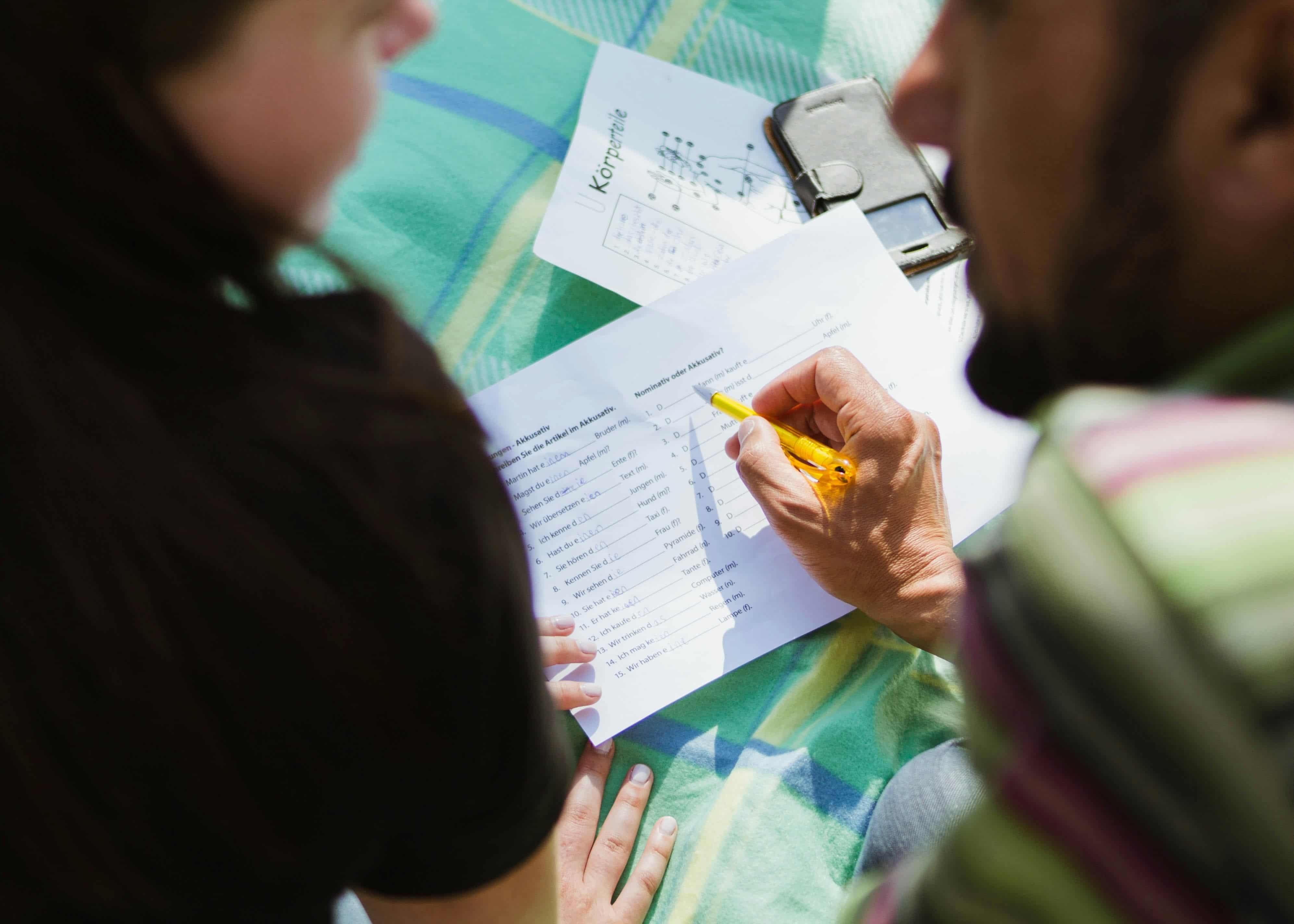
Step 4: Meet the German language requirement
Check which proof your state office accepts before booking an exam. In practice, states and the GMK, the conference of state health ministers, usually ask for B2 German for the licence. No federal law names this level. Your office decides whether a general B2 certificate is enough or you also need a medical German exam.

Check which German certificate your state office accepts before you book an exam.
Step 5: Get the right visa for your stage
Which residence permit you need depends on how far along you are with recognition. Most applicants from outside the EU, EEA and Switzerland apply before travelling. US citizens and others covered by the entry rule in Sources can enter without a visa for a long stay and apply in Germany within 90 days. They still need employment authorisation and the nursing licence before starting work.
- Recognition visa (to close your gaps in Germany): If your deficit notice says you can close the gaps through a course in Germany, you can come on that basis. This could be an adaptation course or job-related German classes. You usually have a set time to finish: up to 24 months, extendable to 3 years at most.
- Recognition partnership (with an employer): An employer must agree to go through recognition with you. You can then come to Germany and do qualified work in your field while completing recognition; reserved nursing tasks need the Erlaubnis. The first permit covers the Federal Employment Agency’s approval period, up to one year, and can be extended to three years' total stay. Before licensing, suitable helper work may also be allowed under the employer and employment conditions in § 16d(3) (see Sources).
- Skilled-worker visa (after full recognition): You need completed recognition, the Erlaubnis and a concrete nursing job offer to start work on this visa.
- EU Blue Card: You can also apply if you have a nursing bachelor's degree, such as a BSN, and meet the lower salary threshold for shortage jobs. Nursing professionals, ISCO group 222, are on that list; the Federal Employment Agency must agree. See Germany vs the UK, USA and Gulf for the 2026 thresholds.
Step 6: Receive your Erlaubnis and the permit to use the title
Once the office confirms your training, reliability, health and German meet the requirements, it issues the Erlaubnis and Berufsurkunde. The Berufsurkunde is the certificate proving your right to use the title Pflegefachfrau or Pflegefachmann and do reserved nursing tasks.
At this final step, the office often asks for:
- your exam certificate or equivalence decision
- a police clearance certificate no older than three months
- a medical certificate confirming you are fit to work
The exact documents and fees vary by state.
Can I become a nurse in Germany from India?
Yes. You follow the same route as other applicants from outside the EU:
- recognition of your Indian nursing qualification by the state office
- B2 German
- a visa for your stage: recognition visa, recognition partnership with an employer, or skilled-worker visa after recognition
We found no India-specific shortcut in the sources checked. If your country has an agreement with Germany that changes this, ask the German embassy or consulate there.
Can I work as a nurse in Germany without experience?
Yes, you can apply for recognition straight after qualifying; German law sets no minimum years of work after qualification. The office first compares your training with German training. If it finds substantial differences, relevant work experience or other proven knowledge and skills can make up for some or all of them (see Sources). Employers may still prefer experience for a particular job.
Can I work as a nurse in Germany as a US citizen?
Yes, the same recognition rules apply to US citizens with non-EU qualifications. A special entry rule lets them enter without a visa for a long stay and apply for a residence permit within 90 days of arrival (see Sources). Before starting nursing work, you still need the nursing licence and a residence permit allowing that employment.
Start your own path
Your documents, office and timeline depend on your country, qualification and chosen state. Our free personalised roadmap on the nurses hub sets these out for your situation. For earnings once you start work, see our nurse salary in Germany guide.
Get a personal offer for your next step
Tell us where you are on your way to working in Germany. We will get back to you with a personal offer, by WhatsApp or email.
What are the basic requirements to become a nurse in Germany?
You need a recognised nursing qualification, or one that can become equivalent through an adaptation course or knowledge test, plus B2 German. If you are not an EU, EEA or Swiss citizen, you also need a residence permit for recognition and then work.
How long does nurse recognition take in Germany?
It depends on your route and state. The nurses hub gives current timelines for EU automatic recognition and individual assessment.
Can I work as a nurse in Germany from India?
Yes, you need state recognition of your qualification and B2 German, like other applicants from outside the EU. Your visa must fit your stage: recognition visa, recognition partnership, or skilled-worker visa after recognition.
Can I work as a nurse in Germany without experience?
Yes, you can apply straight after qualifying. Work experience is not a minimum requirement, but the office can consider whether relevant experience makes up for differences from German training.
Can I work as a nurse in Germany as a US citizen?
Yes, the same recognition requirements apply to non-EU qualifications. US citizens can enter without a visa for a long stay and apply for a residence permit within 90 days. You can start nursing work only once you hold the nursing licence and your permit allows employment.
What is the Berufsurkunde?
It is the certificate proving your Erlaubnis. This state licence lets you use the title Pflegefachfrau or Pflegefachmann and do reserved nursing tasks.